

Blog 8: The Overuse Injuries Playbook
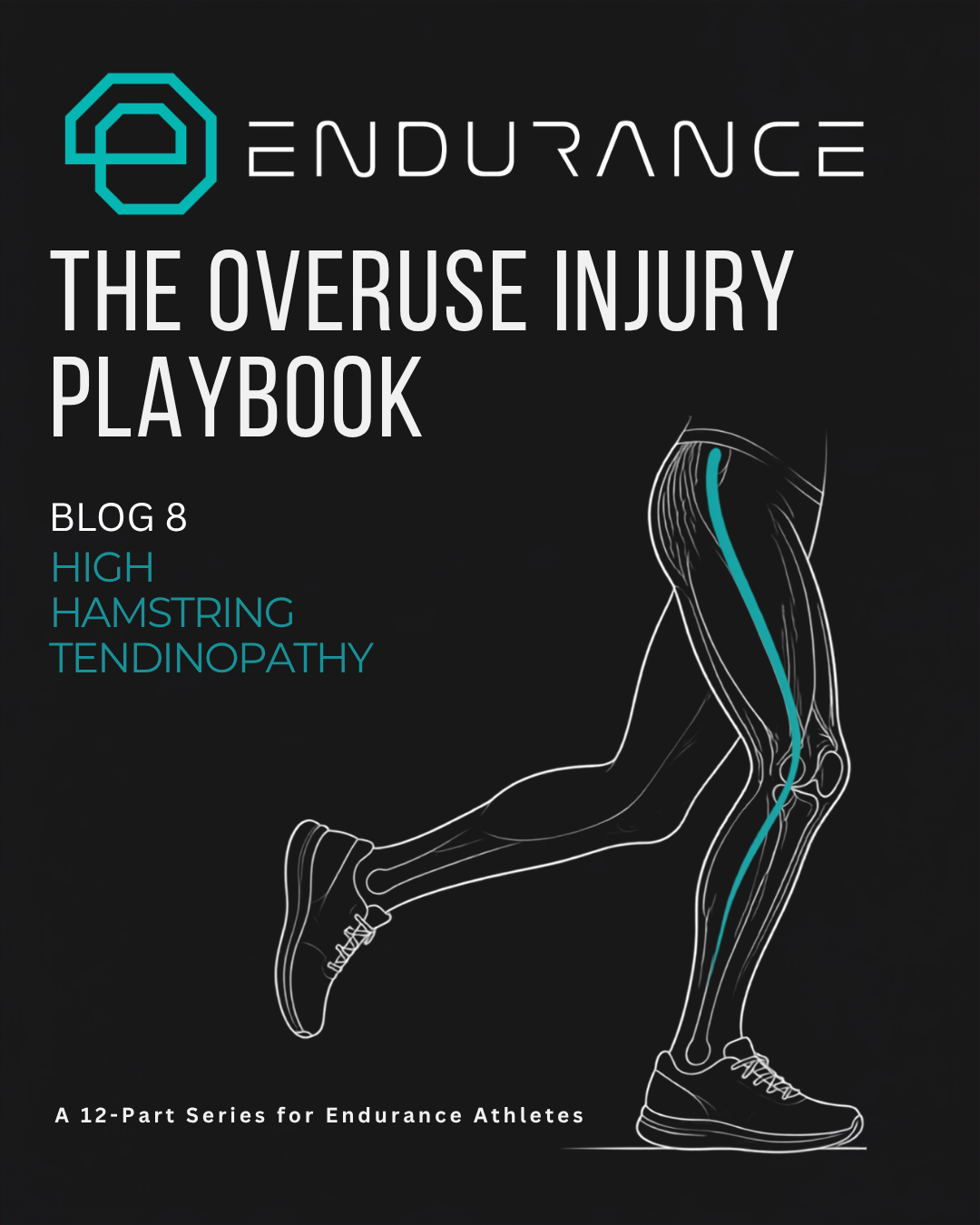
Part 8: High Hamstring Tendinopathy: Why Your Glute Hurts and How to Fix It
Welcome back to The Overuse Injury Playbook. I'm Dr. Keirstyn, a chiropractor and endurance coach. In this series, we are breaking down the most common injuries that sideline athletes. In Part 1, we covered plantar fasciitis, in Part 2, we tackled Achilles tendinopathy, in Part 3, we broke down shin splints, in Part 4, we looked at runner's knee, in Part 5, we covered IT band syndrome, in Part 6, we looked at meniscus injuries, and in Part 7, we covered stress fractures. Today, we are diving into a deep, nagging ache that makes sitting uncomfortable and speed work feel impossible: high hamstring tendinopathy.
It usually starts as a dull ache right where your glute meets your thigh. You might notice it most when you are sitting on a hard chair, driving, or running uphill. At first, it feels like a tight muscle that just needs a good stretch. But the more you stretch it, the worse it seems to get. Soon, that dull ache becomes a sharp pain when you try to accelerate or run at faster paces.
This is proximal hamstring tendinopathy, commonly known as high hamstring tendinopathy. It is a stubborn overuse injury that affects the tendons connecting your hamstring muscles to your sit bone (the ischial tuberosity).
What High Hamstring Tendinopathy Actually Is
Your hamstrings are a group of three muscles running down the back of your thigh. They are responsible for bending your knee and extending your hip. The high hamstring tendon attaches these muscles directly to your pelvis at the sit bone.
Unlike a sudden hamstring strain, which is a tear in the muscle belly, high hamstring tendinopathy is a gradual wear and tear of the tendon. When your hip is flexed (like when you are running uphill, sitting, or bending forward), the tendon is compressed against the bone. Repetitive compression combined with high training loads leads to microtears, disorganized collagen fibers, and chronic irritation.
Why Your Hamstring Is Overworking
This injury is rarely just about the hamstring itself. It is usually a sign of poor mechanics and muscle imbalances further up the chain.
Weak Glutes: Your glutes are supposed to be the primary drivers of hip extension. If your glutes are weak or not firing properly, your hamstrings have to work double time to pull your leg back with every stride.
Anterior Pelvic Tilt: If your pelvis tilts forward, it puts your hamstrings on a constant, passive stretch. Running in this position increases the tension and compression on the high hamstring tendon.
Aggressive Stretching: Many athletes try to stretch their way out of tightness. When you perform deep hamstring stretches, you compress the irritated tendon against the sit bone, which actually delays healing.
Sudden Speed or Hill Work: Speed work and hill running require deep hip flexion and powerful hamstring contractions, which can quickly overload a tendon that is not prepared for the demand.
How to Actually Fix High Hamstring Tendinopathy
To heal this tendon, we have to stop compressing it and start building its capacity to handle load.
Stop Aggressive Stretching: Avoid deep hamstring stretches that bend you forward at the waist. Instead, focus on releasing tension in the surrounding muscles using the Figure 4 Stretch or Pigeon stretch to target your glutes.
Manage the Load: Modify your training to avoid pain. This means cutting out speed work, hill repeats, and deep squats for a while. Keep your runs flat and at an easy pace. If running is too painful, swap it for swimming or flat road cycling.
Build Glute Strength: You must teach your glutes to take over the work of hip extension. The Glute Bridge is a foundational exercise to build glute strength without overloading the hamstring tendon.
Targeted Hamstring Loading: Tendons need load to heal, but it must be the right kind of load. Start with isometric hamstring holds (like holding a bridge with your knees slightly bent) and progress to eccentric loading. The Single Leg Deadlift is an excellent functional exercise that builds hamstring and glute strength while improving single leg stability.
Manual Therapy: In the clinic, I use soft tissue therapy and joint mobilizations to restore proper movement to your hips and pelvis, taking the mechanical stress off the hamstring tendon.
Final Word
High hamstring tendinopathy is a slow burner, but it is entirely treatable. Stop stretching the pain and start building the strength your hips and hamstrings need to handle the load.
Up next in Part 9, we will look at groin and adductor strains, the nagging inner thigh pain that limits your power.
Struggling with a deep ache in your glute or pain when sitting? Book an assessment with me, Dr. Keirstyn, at Endurance Therapeutics. Let's find the root cause and build a plan to get you back to training pain free.
📍 Endurance Therapeutics | Oakville, Ontario
📞 905-288-7161