

Blog 3: The Overuse Injuries Playbook
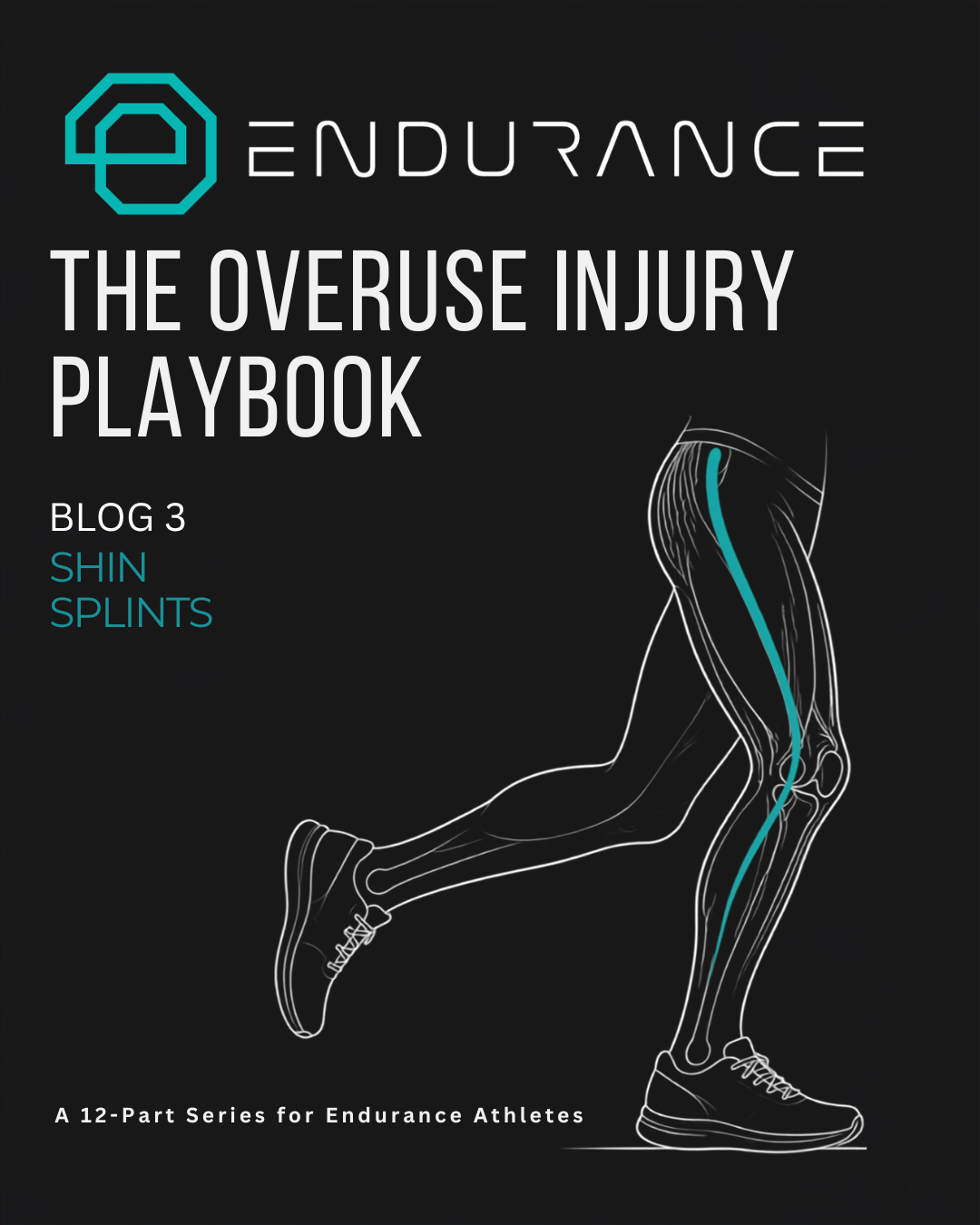
Part 3: Shin Splints: Why Your Shins Hurt and How to Fix Them Before They Turn Into a Stress Fracture
Welcome back to The Overuse Injury Playbook. I'm Dr. Keirstyn, a chiropractor who specializes in helping endurance athletes train smarter. In this series, we're digging into the root causes of common running injuries. In Part 1, we covered plantar fasciitis, and in Part 2, we tackled Achilles tendinopathy. Today, we're tackling one of the most common and frustrating pains for new and experienced runners alike: shin splints.
Almost every runner has a shin splint story. You're a few weeks into a new training block, feeling fit and motivated. Then you notice a dull, throbbing ache along the inside of your shinbone during your run. At first, you can run through it, but it gets progressively worse. Soon, the pain is sharp with every footstrike, and the area is tender to the touch even when you're resting. You've just met Medial Tibial Stress Syndrome, the clinical term for shin splints.
This isn't a sign of weakness. It's a sign that your training load has outpaced your body's ability to adapt. It's an overload injury, plain and simple.
What Shin Splints Actually Are
The term "shin splints" describes pain along the inner edge of your tibia (shinbone). It's caused by repetitive stress that leads to inflammation of the muscles, tendons, and bone tissue in that area. Essentially, the muscles that attach to the shinbone are pulling on the bone's outer layer (the periosteum), causing irritation and pain.
It's crucial to differentiate this from a stress fracture, which is a small crack in the bone itself. With shin splints, the pain is usually spread over a larger area (more than 5cm), whereas stress fracture pain is often very localized to a single, specific spot you can point to with one finger. If the pain is getting worse and more localized, it's critical to get it assessed properly.
Why They Happen: The "Too Much, Too Soon" Injury
Shin splints are the poster child for doing too much, too soon. Your body is sending a clear signal that the load is too high. Here are the main reasons that load gets out of balance:
Rapid Increase in Mileage or Intensity: This is the number one cause. Your bones, tendons, and muscles need time to adapt to new stress. If you double your weekly mileage or jump into intense speed work without a gradual build-up, the tissues in your lower legs become overloaded.
Hard Surfaces: Consistently running on concrete or asphalt increases the impact forces traveling up your legs. If your body isn't strong enough to absorb that shock, your shins often take the hit.
Worn-Out Shoes: Running shoes lose their cushioning and support over time. Continuing to run in a pair that's past its prime can alter your mechanics and contribute to increased stress on your lower legs.
Weak Hips and Core: This is a big one that runners often overlook. If your glutes and core are weak, you lose stability with every step. This can cause your lower leg to rotate inward and your foot to overpronate, placing excessive strain on the muscles of your inner shin.
Poor Running Mechanics: Overstriding (landing with your foot far out in front of your body) acts like a braking force with every step, sending jarring impact straight up the tibia.
How to Actually Fix Shin Splints
The first step is to listen to your body and reduce the load. You may need to take a few days or even a week or two off from running to let the inflammation subside.
Calm Things Down: Back off from running and any other high-impact activities that cause pain. You can cross-train with swimming, cycling, or pool running to maintain your fitness without the impact.
Strengthen the Front of Your Shins: The tibialis anterior muscle on the front of your shin is often weak. Simple toe taps and heel walks are great for building endurance in this muscle.
Build Stronger Calves: Your calf muscles are your body's primary shock absorbers. If they're weak, your shins pay the price. Calf raises (both straight-knee and bent-knee) are non-negotiable for building lower leg resilience.
Address the Hips: As we discussed, weak hips are a major contributor. Incorporate exercises like glute bridges, clamshells, and hip hikes to build the stability your lower body needs.
Improve Ankle Mobility: Limited ankle mobility can force your foot to overpronate, stressing the shin. Regular calf stretching and ankle mobility drills can make a significant difference.
Gradual Return to Running: Once you're pain-free with daily activities and can hop on the spot without pain, you can start a gradual return to running. Begin with short walk/run intervals on a softer surface and increase your volume slowly, no more than 10% per week.
Final Word
Think of shin splints as an early warning system. Your body is telling you that the load is too high for your current capacity. Instead of just resting and hoping it goes away, use it as an opportunity to address the underlying weaknesses. By building a stronger, more resilient foundation, you can move past this frustrating injury and get back to consistent, pain-free training.
Up next in Part 4, we'll tackle runner's knee, the common pain that shows up on the front of your knee.
Dealing with shin pain and tired of the run-rest-repeat cycle? Book an assessment with me, Dr. Keirstyn, at Endurance Therapeutics. We'll find the root cause and build a plan to get you running strong and pain-free.
📍 Endurance Therapeutics | Oakville, Ontario
📞 905-288-7161