

Blog 4: Recovery Done Right
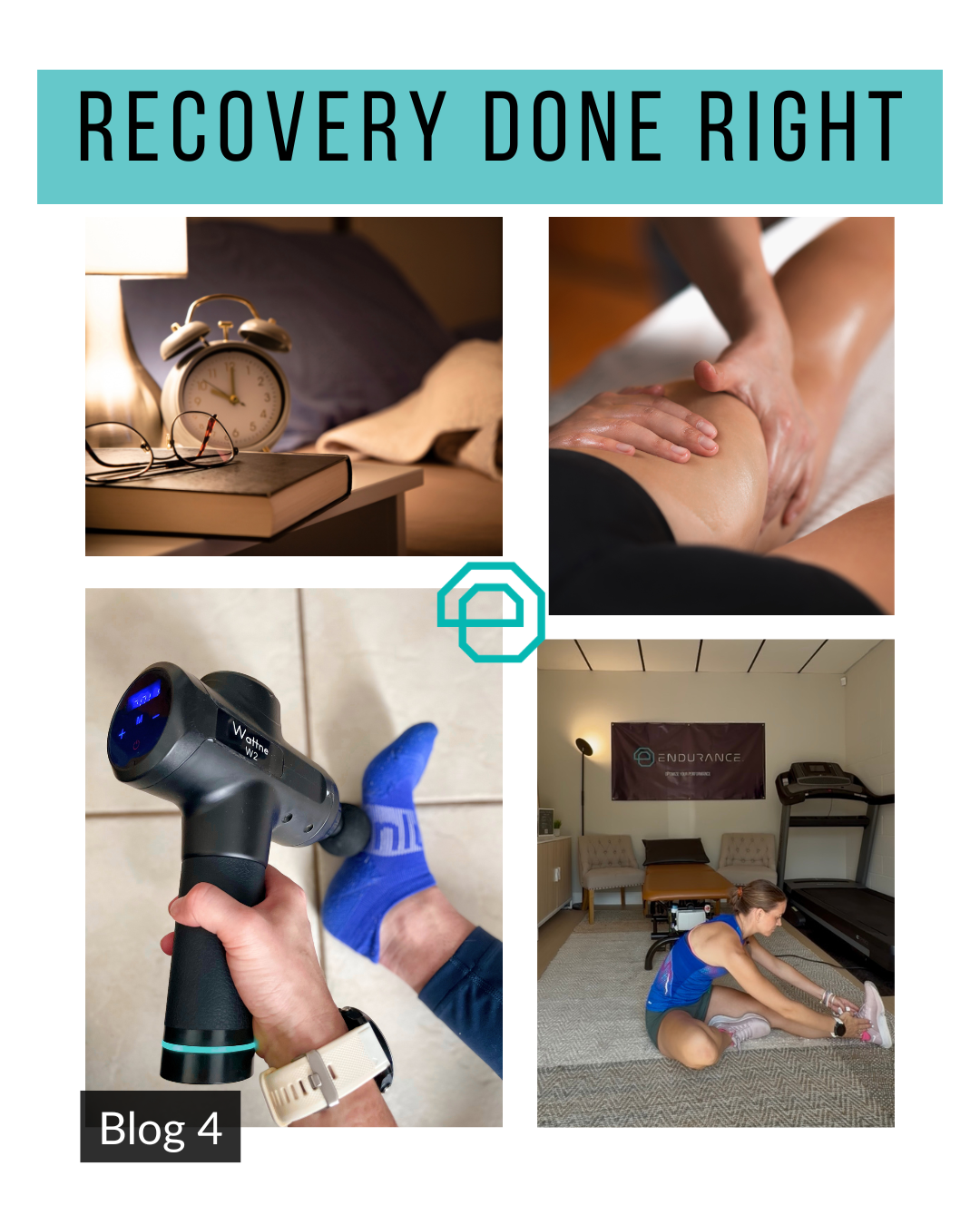
Part 4: Building Your Recovery Practice: Including When Professional Treatment Makes the Difference
Welcome to the final part of Recovery Done Right. Part 1 established recovery as the process through which training adaptations are actually built. Part 2 covered sleep and nervous system recovery as the foundation. Part 3 addressed soft tissue work, active recovery, and temperature tools. Part 4 brings it all together. A practical weekly recovery structure and an honest look at when self-care is enough and when professional treatment is what actually moves the needle.
The goal of this series has been to shift how you think about recovery from something you do when something goes wrong to something you build deliberately into your athletic life. This final part is about making that practical.
A Weekly Recovery Framework
Recovery does not require a complex system. It requires consistent habits applied at the right times. Here is how a recovery-informed training week looks across different intensity phases:
After hard sessions (race-pace work, long runs, heavy lifting, intense sport):
Soft tissue work for 10 to 15 minutes targeting the primary areas loaded in that session — hips and calves after running, thoracic spine and shoulders after swimming, glutes and quads after cycling
Light movement or walking the following day rather than complete rest
Protect sleep aggressively in the 48 hours following the hardest sessions of the week — this is when the most significant adaptation is happening
On easy days and rest days:
20 to 30 minutes of active recovery movement — walking, easy cycling, gentle swimming
Mobility work targeting the restriction patterns most relevant to your sport — hip flexors, thoracic rotation, ankle dorsiflexion
Foam rolling or self-myofascial release on areas that accumulated tension during the training week
Weekly:
At least one full recovery day with no structured training (genuine rest or very gentle activity)
An honest check-in on the markers we covered in the Load Management series. Resting heart rate trend, sleep quality, motivation, and general sense of wellbeing
Proactive soft tissue maintenance on the regions that are chronically tight for your sport and body
Deload Weeks Are Recovery Weeks
As we covered in our Load Management series, the deload week every third or fourth week of training is not just about reducing training stress. It is an active recovery investment. During deload weeks, the reduced training volume creates the space for accumulated fatigue to clear, tissue micro-damage to fully repair, and the nervous system to reset.
The athletes who use deload weeks deliberately, maintaining their recovery habits while reducing training load, emerge from them noticeably fresher, more powerful, and more motivated than those who simply reduce training without actively supporting recovery. The combination of reduced load and deliberate recovery is more effective than either in isolation.
When Self-Care Is Not Enough: The Role of Professional Treatment
Self-care recovery tools are powerful and worth investing in consistently. But there are things they cannot reach. And this is where regular professional treatment becomes not a luxury but a genuine performance and injury prevention tool.
What professional soft tissue treatment and chiropractic care does that self-care cannot:
1. Addresses compensation patterns that have built up over months of training:
The chronic hip flexor tightness that no amount of stretching fully releases, the thoracic stiffness that foam rolling touches the surface of but does not fully mobilize, the joint restriction that is altering movement mechanics without the athlete realizing it
2. Identifies tissue changes before they become injuries:
In clinical practice, I regularly find tissue that is in the early stages of breakdown, tendon irritation, joint restriction, muscle guarding, before the athlete has developed symptoms significant enough to notice. Early intervention at this stage is exponentially more effective than treating a fully developed injury
3. Restores neuromuscular firing patterns:
Manual therapy has measurable effects on neuromuscular activation, including restoring glute firing patterns that self-activation work cannot fully establish in chronically inhibited muscles
4. Provides an objective external assessment:
The athlete cannot fully assess their own movement quality, tissue state, or compensation patterns. Regular professional assessment provides the external perspective that identifies what is building before it becomes a problem
How to Think About Maintenance Treatment
The most common pattern I see in athletes is that they come in when something is wrong, get it addressed, feel better, and then return only when the next thing goes wrong. This reactive approach means they are always behind the eight ball, treating injuries rather than preventing them.
The athletes I work with who stay the healthiest and perform the most consistently treat regular chiropractic care the same way they treat their training plan. It is scheduled. It is proactive. It is maintenance, not crisis management.
What this looks like in practice varies by sport, training volume, and individual injury history. For some athletes it is monthly. For others in heavy training periods it is every two to three weeks. The frequency matters less than the regularity, the consistent external assessment and treatment that catches what is accumulating before it becomes what sends you to the clinic in pain.
Think of it this way: you service your car on a schedule, not only when the engine light comes on. Your body deserves the same respect.
Building Recovery Into Your Identity as an Athlete
The athletes who stay in sport the longest, whether that is competitive triathlon into their 50s, recreational running into their 70s, or hockey well into masters play, share a consistent characteristic. They do not separate training from recovery. They treat both as part of the same practice.
Recovery done right is not a passive process. It is an active, deliberate, evidence-based investment in the body's capacity to absorb training, adapt, and perform. Sleep, soft tissue work, active recovery, and regular professional maintenance are not extras. They are the framework that makes everything else in your training actually work.
Train hard. Recover harder. That is the formula.
______
Regular maintenance care is one of the highest-return investments an athlete can make in their long-term performance and health. If you want a practitioner who understands the demands of your sport and can help you build a recovery practice that keeps you training consistently and performing at your best, reach out to book an appointment with Dr. Keirstyn at Endurance Therapeutics.
📍 Endurance Therapeutics | Oakville