

Blog 1: Recovery Done Right
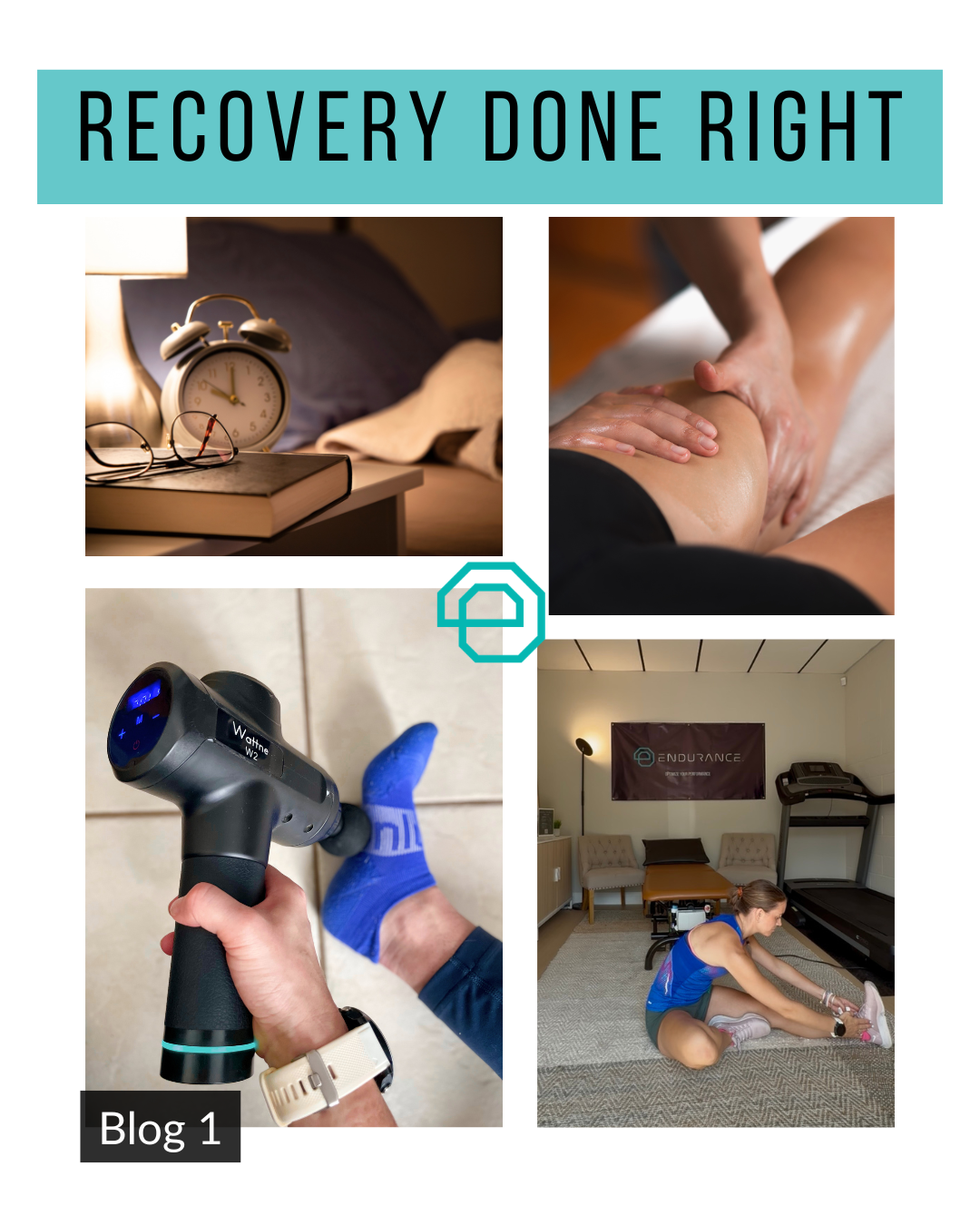
Part 1: Why Recovery Is Training: And Why Most Athletes Get This Wrong
Welcome to Recovery Done Right, a four-part series on the part of athletic performance that most athletes treat as optional, passive, or something to do only when they are injured. Recovery is not the absence of training. It is training. And the athletes who understand this are the ones who stay healthy the longest, improve the most consistently, and get the most out of every session they put in.
We are starting with the foundation. What recovery actually is physiologically, why it is inseparable from performance, and why the way most athletes approach it is leaving significant results on the table.
What Is Actually Happening When You Recover
Training does not make you fitter. Training provides the stimulus. Recovery is when the adaptation actually happens.
When you run, lift, skate, or swim, you are creating controlled stress on the body. Muscle fibres develop micro-tears. Glycogen stores are depleted. The nervous system fatigues. Connective tissue is loaded beyond its resting state. None of this is damage in the harmful sense, it is the necessary signal that tells the body to rebuild stronger, more capable, and more resilient than it was before.
But that rebuilding only happens during recovery. Specifically:
Muscle protein synthesis :the process of repairing and reinforcing muscle fibres — peaks in the hours and days after training, not during it
Tendon and connective tissue remodelling: a slower process than muscle adaptation, requiring adequate recovery time between loading bouts to lay down new collagen and reinforce existing structures
Nervous system restoration: the neuromuscular fatigue that accumulates during training impairs movement quality, coordination, and force production. Recovery restores the nervous system's capacity to recruit and fire muscle efficiently
Hormonal rebalancing: training elevates cortisol, the primary stress hormone. Extended periods without adequate recovery keep cortisol elevated, suppressing the anabolic hormones that drive tissue adaptation and immune function
Every adaptation you are working for, strength, endurance, speed, resilience, is a product of this recovery process. Training without adequate recovery is like making withdrawals from a bank account without ever making deposits. Eventually the balance runs out.
The Fitness-Fatigue Model
Sport scientists describe the relationship between training and performance through what is called the fitness-fatigue model. Every training session creates two simultaneous responses in the body: a fitness gain and a fatigue response. The fitness gain is the adaptation you are working toward; stronger muscles, better endurance, improved mechanics. The fatigue response is the accumulated stress that temporarily masks that fitness gain.
In the immediate aftermath of a hard session, you are fitter than you were before, but you feel worse because the fatigue is masking the fitness. Recovery reduces the fatigue. And when the fatigue clears, the fitness gain becomes visible as improved performance.
This is why athletes who train hard without recovering adequately never seem to improve despite consistent work. The fitness gains are there. The fatigue is just never fully clearing enough to let them show up.
Why Most Athletes Get Recovery Wrong
In my experience working with athletes across every sport and every level, the most common recovery mistakes follow predictable patterns:
Treating rest as laziness: the cultural narrative in endurance and competitive sport consistently glorifies training volume and demonizes rest. Athletes who take recovery seriously are sometimes made to feel like they are not working hard enough. This is one of the most damaging myths in sport.
Confusing passive rest with active recovery: doing nothing is not always the most effective recovery strategy. The body often recovers faster with light intentional movement than with complete rest. We cover this in detail in Part 3.
Recovering only when forced to: most athletes think about recovery after an injury or a significant performance decline. The athletes who stay healthy do not wait for the signal to recover. They build it into the plan before the signal comes.
Underestimating cumulative fatigue: a single hard session is rarely the problem. It is the accumulation of hard sessions without adequate recovery between them that creates the environment where injuries happen and performance stagnates.
Ignoring life load: as we covered in our Load Management series, the nervous system does not distinguish between training stress and life stress. A hard week at work, poor sleep, or significant emotional demand all reduce the body's capacity to recover from training. Recovery planning needs to account for total load, not just training load.
Recovery Is Not One Size Fits All
How much recovery you need depends on several factors that vary between athletes and across a training season:
Training Age:
Newer athletes tend to recover faster from moderate loads because the adaptive stimulus is more novel. More experienced athletes working at higher intensities need more deliberate recovery management.
Age:
Recovery capacity decreases with age. What a 25-year-old bounces back from in 24 hours may require 48 to 72 hours at 45. Masters athletes who train with the recovery timelines of their younger selves are one of the most consistent injury patterns I see.
Training phase:
Recovery needs are higher during peak training blocks than during base phases. Race week and the deload weeks before major events require more deliberate recovery emphasis.
Individual Stress Tolerance:
Some athletes are more resilient to accumulated load than others. Understanding your own response to training stress is a skill that develops over a career and is one of the most valuable things an athlete can develop.
Up Next: Sleep and the Nervous System
Recovery starts before any foam roller or ice bath. It starts with sleep. Part 2 of Recovery Done Right covers the most powerful recovery tool available to any athlete, and the one that is most consistently undervalued, shortened, and sacrificed for extra training time. See you there.
______
If you are training consistently but not improving, or finding yourself in a cycle of fatigue and minor injuries, recovery is almost always part of the answer. I work with athletes to build training and recovery approaches that actually hold together. Reach out to book a consultation with Dr. Keirstyn at Endurance Therapeutics.
📍 Endurance Therapeutics | Oakville