

Blog 2: Recovery Done Right
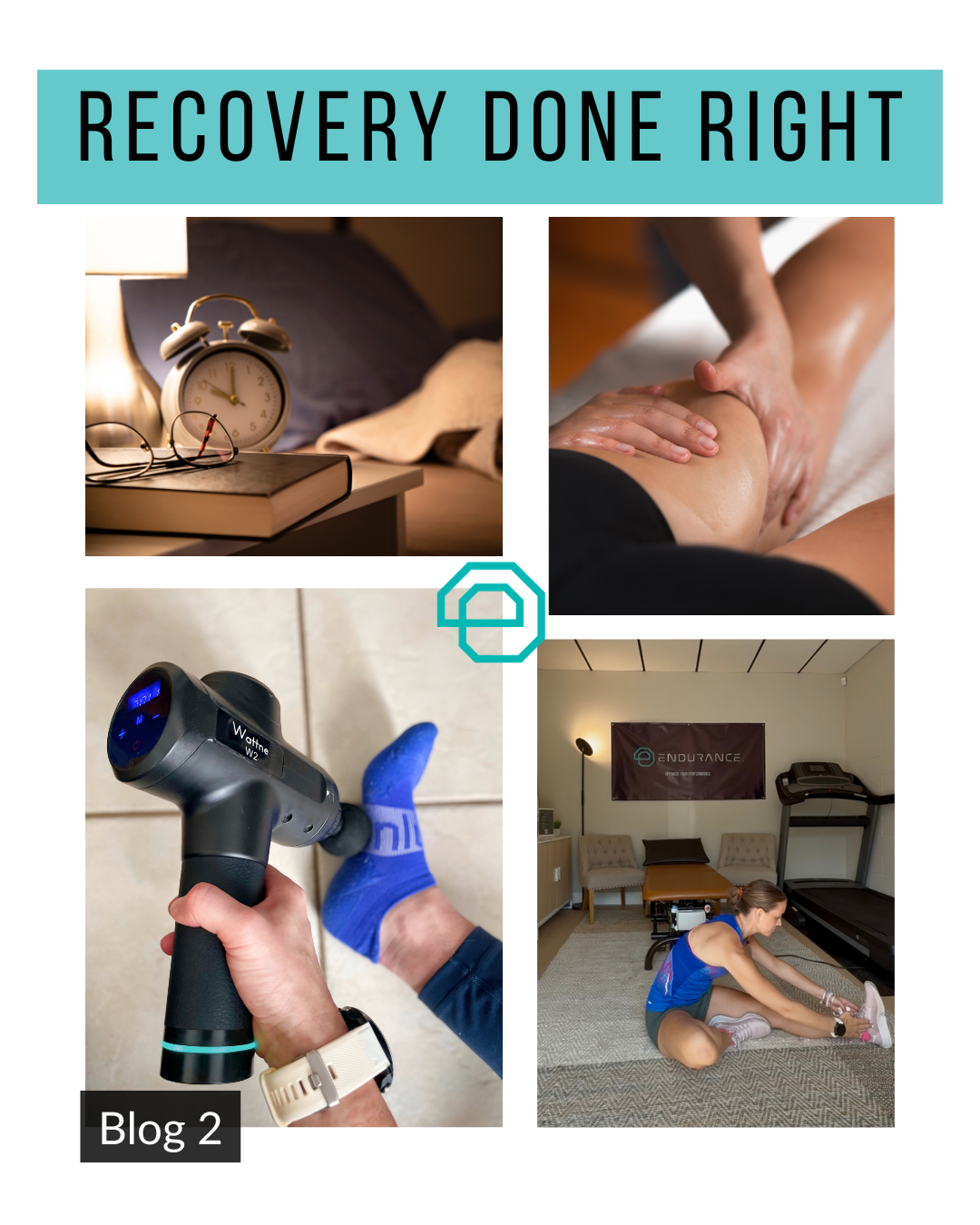
Part 2: Sleep and the Nervous System: The Most Powerful Recovery Tool You Already Have
Welcome back to Recovery Done Right. In Part 1 we established what recovery actually is, the physiological process through which training adaptations are built, and why most athletes treat it as an afterthought when it should be a priority. Part 2 is about the single most powerful recovery tool available to any athlete. It costs nothing, requires no equipment, and is the one most consistently sacrificed in the name of more training time.
Sleep.
What Sleep Is Actually Doing for the Athletic Body
Sleep is not passive downtime. It is the most active recovery process the body has. During deep sleep specifically, the body executes the majority of its repair and adaptation work:
Growth Hormone Release:
The largest single pulse of growth hormone in a 24-hour period occurs during deep slow-wave sleep. Growth hormone is the primary driver of muscle protein synthesis, tendon repair, and tissue remodelling. Cutting sleep short cuts the growth hormone window short.
Nervous System Restoration:
The neuromuscular fatigue that accumulates during training is cleared during sleep. Motor patterns are consolidated, reaction time is restored, and the firing efficiency of the neuromuscular system is reset. Athletes who sleep poorly show measurable declines in coordination and reaction time that persist into training.
Cortisol Regulation:
Cortisol, the primary stress hormone elevated by training and life stress, is actively regulated during sleep. Chronic sleep deprivation keeps cortisol elevated, which suppresses immune function, impairs tissue repair, and creates the hormonal environment where overtraining and illness thrive.
Glycogen Replenishment:
While nutrition drives glycogen restoration, sleep optimizes the hormonal environment that makes that restoration efficient. Poor sleep impairs carbohydrate metabolism and reduces the effectiveness of post-training nutrition.
Inflammatory Regulation:
The inflammatory response to training, necessary for adaptation but damaging if chronically elevated, is actively modulated during sleep. Athletes with chronic sleep restriction show higher baseline inflammatory markers, which is one of the mechanisms behind the higher injury rates in sleep-deprived athletes.
What the Research Says About Sleep and Athletic Performance
The evidence on sleep and athletic performance is among the clearest in sports science. A landmark study from Stanford University extended sleep in varsity athletes to 10 hours per night over five to seven weeks. The results were significant across every performance measure tested; sprint times improved, reaction times improved, mood improved, and fatigue ratings decreased.
Research on sleep restriction tells the other side of the story equally clearly. Athletes sleeping fewer than eight hours per night show significantly higher injury rates than those sleeping eight or more. A study in the British Journal of Sports Medicine found that adolescent athletes sleeping less than eight hours were 1.7 times more likely to sustain an injury than those sleeping eight or more. The mechanism is straightforward, sleep-deprived athletes have impaired neuromuscular control, slower reaction times, and reduced pain tolerance, all of which increase injury risk under training and competition demand.
The Nervous System Recovery You Are Probably Missing
Beyond the physical repair processes, sleep is critical for nervous system recovery in ways that most athletes do not think about. The autonomic nervous system, the system that governs the balance between sympathetic (fight or flight) and parasympathetic (rest and digest) states, is regulated during sleep.
Athletes who are chronically under-recovered tend to live in a state of sympathetic dominance — their nervous system is in a persistent state of alertness and stress response. This is the physiological basis of overtraining syndrome, and it has consequences that go beyond physical fatigue:
Elevated resting heart rate that does not return to baseline
Poor heart rate variability — one of the most sensitive markers of autonomic nervous system recovery status
Difficulty falling asleep despite physical exhaustion — a paradox that is actually a sign of sympathetic overactivation
Irritability, anxiety, and mood disturbance — the psychological expression of an autonomic nervous system that cannot find its way to parasympathetic recovery
Regular, adequate sleep is the most effective intervention available for restoring autonomic balance. No supplement, no modality, and no training adjustment replaces it.
Practical Sleep Habits for Athletes
The research on sleep hygiene is consistent. These habits reliably improve sleep quality and duration:
Protect eight to nine hours of sleep opportunity: not just time in bed, but genuine sleep time. Most athletes need to work backward from their morning alarm to establish a bedtime that actually allows this.
Consistent sleep and wake times: the circadian rhythm that governs sleep architecture is most efficient when it is consistent. Variable bedtimes fragment sleep quality even when total duration is adequate.
Reduce blue light exposure in the 60 to 90 minutes before bed: blue wavelength light suppresses melatonin, the hormone that initiates sleep. Phone and screen use in the hour before bed is one of the most reliable sleep quality disruptors in athletes who otherwise have good habits.
Keep the sleep environment cool: core body temperature needs to drop slightly to initiate and maintain deep sleep. A cool room (around 18 to 19 degrees Celsius) supports this process.
Manage evening training timing: high-intensity training within two to three hours of bedtime elevates core temperature and cortisol in ways that can delay sleep onset and reduce deep sleep proportion. Where possible, hard sessions are better scheduled in the morning or mid-afternoon.
Limit alcohol: alcohol may help initiate sleep but significantly disrupts sleep architecture, reducing slow-wave and REM sleep. Even moderate alcohol use in the evening meaningfully reduces recovery quality.
A Note on Naps
Short naps of 20 to 30 minutes can meaningfully supplement overnight sleep and are a legitimate recovery tool for athletes in high training loads. Research on napping in athletes shows improvements in alertness, reaction time, and sprint performance following a short afternoon nap. Longer naps risk sleep inertia and can interfere with overnight sleep quality. Keep them short, keep them early in the afternoon, and treat them as a supplement to adequate overnight sleep rather than a substitute for it.
Up Next: Soft Tissue Work and Active Recovery
Sleep is the foundation. Part 3 of Recovery Done Right builds on it with the hands-on recovery practices that keep the body moving, reduce the physical residue of hard training, and maintain the tissue quality that protects athletes from injury. See you there.
______
Sleep and nervous system recovery are things I address with athletes in the clinic regularly, not just the physical side but the full recovery picture. If your recovery is not keeping pace with your training, reach out to book a consultation with Dr. Keirstyn at Endurance Therapeutics.
📍 Endurance Therapeutics | Oakville