

Blog 3: Recovery Done Right
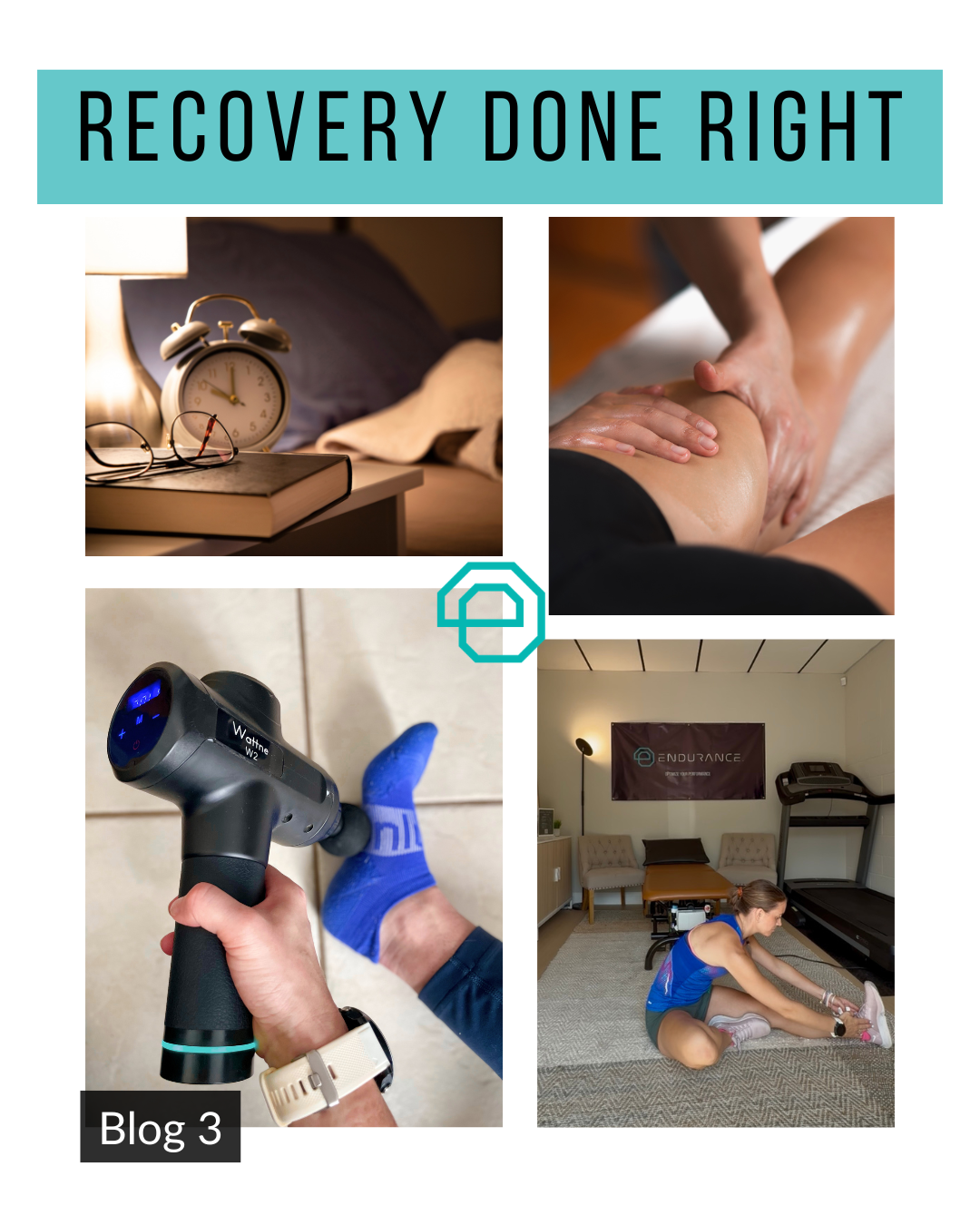
Part 3: Soft Tissue Work and Active Recovery: What Actually Works and Why
Welcome back to Recovery Done Right. Part 1 established why recovery is training, not the absence of it. Part 2 covered sleep as the foundation of all athletic recovery and its role in nervous system restoration. Part 3 gets into the hands-on side, the soft tissue work, active recovery strategies, and temperature-based tools that keep the body moving, reduce accumulated tension, and maintain the tissue quality that protects athletes from injury.
A quick note on scope before we begin: I am approaching this from my perspective as a chiropractor and endurance coach. What I am covering here falls within the realm of self-care, coaching practice, and adjunctive therapy, not medical treatment. For specific injuries or complex presentations, professional assessment and treatment is always the appropriate starting point.
Why Soft Tissue Work Matters for Athletes
Training creates more than muscle fatigue. It creates accumulated tension in the soft tissues; the muscles, fascia, tendons, and connective tissue that support and move every joint in the body. Over a training week or season, this tension builds. Movement quality degrades. Range of motion reduces. Compensation patterns develop as the body works around restricted tissue.
Soft tissue work, whether self-administered through foam rolling and targeted massage tools, or professionally applied through manual therapy by a professional like me, addresses this accumulated tension. It restores tissue extensibility, reduces the neural tone that keeps muscles in a chronically guarded state, and maintains the movement quality that training and sport demand.
The research on self-myofascial release (foam rolling and similar tools) is generally positive for short-term recovery outcomes; reduced muscle soreness, improved range of motion, and reduced perceived fatigue in the 24 to 72 hours following hard training. What the research is clear about is that the benefit comes from consistency, not intensity. Hard, aggressive foam rolling that creates significant pain is not more effective than moderate pressure work. The nervous system responds better to sustained, tolerable pressure than to pain.
Foam Rolling and Self-Myofascial Release: How to Do It Well
The areas that benefit most from regular soft tissue work in endurance and multisport athletes:
1. Hip Flexors and Quads:
Chronically shortened in runners, cyclists, and any athlete who sits for significant portions of the day. Regular work here reduces the anterior pelvic tilt and lumbar loading we covered in the Lower Back Pain series.
2. Glutes and Piriformis:
The primary movers of athletic performance and also the structures that accumulate the most tension under sustained loading. A lacrosse ball in the glute and piriformis region is one of the highest-return soft tissue tools available.
3. Thoracic Spine:
Foam roller thoracic extension is one of the most valuable mobility and recovery tools for cyclists, swimmers, and any athlete in sustained forward flexion. Rolling the mid-back over a foam roller in extension directly addresses the thoracic stiffness that drives lumbar compensation.
4. Calves and Achilles:
Runners and triathletes accumulate significant calf and Achilles tension across a training week. Regular soft tissue work here reduces the load on the Achilles tendon and plantar fascia and maintains the ankle dorsiflexion that protects the entire lower limb chain.
IT Band and Lateral Hip:
Note that rolling directly on the IT band is less effective than working the structures that tension it — the glutes and TFL. If the IT band feels tight, the more effective intervention is soft tissue work on the glute medius and TFL above it.
Practical approach: two to three minutes per region, moderate pressure that is tolerable without significant guarding, slow movement pausing on areas of increased tension. Done consistently after training sessions and on rest days, this becomes one of the most effective injury prevention habits available.
Active Recovery: Why Moving Is Often Better Than Resting
Complete rest is not always the most effective recovery strategy. Light movement increases circulation, promotes lymphatic drainage, reduces muscle soreness, and maintains the neuromuscular patterns that training has built — all without adding meaningful additional load to the system.
What active recovery looks like in practice:
Easy walking:
20 to 30 minutes at a genuinely easy pace the day after a hard session or race. Increases circulation to fatigued tissues without creating additional stress. One of the simplest and most consistently underused recovery tools available.
Easy cycling or swimming:
Particularly effective the day after hard run sessions for runners and triathletes because the non-impact nature of cycling and the buoyancy of swimming allows movement and circulation without the ground reaction forces that accumulate tissue damage.
Mobility and gentle movement:
Hip 90/90 rotations, thoracic rotation work, and gentle dynamic stretching maintain range of motion and reduce the stiffness that accumulates after hard training. This is not a performance workout. It is a circulation and tissue quality session.
Yoga or Pilates at low intensity:
For athletes who enjoy these modalities, a recovery-focused session provides both physical and nervous system recovery benefits. The key is keeping intensity genuinely low.
The principle that guides active recovery decisions. If you feel worse during or after the session than you did before, it was not recovery. It was additional stress. Active recovery should leave you feeling better, not depleted.
Heat and Cold in Recovery
Temperature-based recovery tools are widely used and genuinely useful when applied appropriately:
Cold Exposure (ice baths, cold water immersion):
Reduces acute inflammation and perceived soreness in the 24 hours following hard training. Most useful after competition or very hard sessions when minimizing soreness for the next day is the priority. Cold exposure may blunt some of the adaptive response to strength training specifically, so timing matters — less useful immediately after strength sessions where the inflammatory response drives the adaptation you are seeking.
Heat (sauna, hot bath, heat packs):
Increases circulation, reduces muscle tension, and supports parasympathetic nervous system activation. Most useful on rest days and in the days following hard sessions when the acute inflammation has passed and promoting tissue repair is the goal. Many athletes also find heat exposure improves sleep quality when used in the evening.
Contrast Therapy (alternating hot and cold):
Particularly effective for extremity recovery, especially forearms, calves, and ankles. The alternating vasoconstriction and vasodilation creates a pumping effect that promotes circulation and lymphatic drainage in the targeted region.
Up Next: Building Your Recovery Practice
You have the tools. Part 4 of Recovery Done Right brings everything together into a practical weekly recovery structure, explains when professional treatment makes the difference that self-care cannot, and gives you the framework to build recovery into your training as deliberately as you plan your sessions. See you in the final part.
______
The soft tissue work I do in the clinic goes significantly beyond what a foam roller can reach, addressing the deeper restrictions and compensation patterns that self-care tools cannot fully access. If your body is accumulating tension that is not clearing between sessions, reach out to book an appointment with Dr. Keirstyn at Endurance Therapeutics.
📍 Endurance Therapeutics | Oakville