

Blog 3: Activate Before You Train
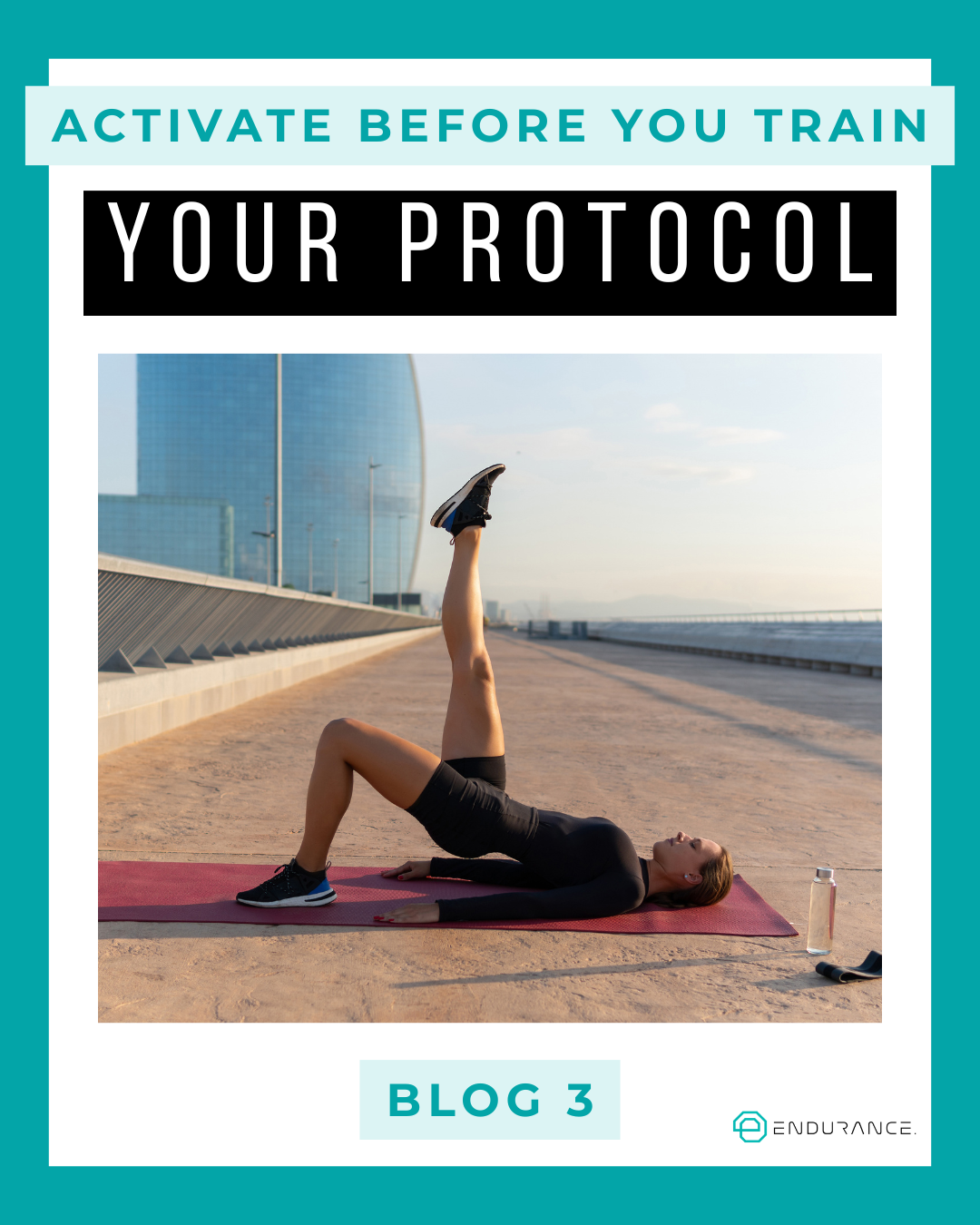
Part 3: Building Your Pre-Training Activation Routine: A Practical Protocol for Athletes
Welcome to the final part of Activate Before You Train. Part 1 explained why muscles switch off and what that costs you in performance and injury risk. Part 2 covered the five activation exercises that actually make a difference; hip hikes, standing fire hydrants, glute bridges, alternating glute bridges, and lateral walks. Part 3 brings it all together into practical, sport-specific protocols you can use starting tomorrow.
The best activation routine is the one you actually do. So let us keep this simple, functional, and built around movements that directly translate to your sport.
The Principles That Guide Good Activation Work
Before the protocols, a few principles worth understanding:
Target your sport's highest-risk patterns first: a runner prioritizes glute and hip stability. A hockey player prioritizes both hip stability and the adductor-glute relationship. Lead with what matters most for how you move.
Activation precedes loading: do this before your strength training or sport session, not after. If you do it after, the training has already happened without the muscle contribution you were trying to create.
Quality over quantity every time: two focused hip hikes with full pelvic control are more valuable than fifteen sloppy ones. The moment you lose the target muscle, the set is over.
Consistency beats perfection: five minutes before every session builds more cumulative benefit than a full protocol done twice a week. Frequency of the pattern is what builds the neurological habit.
Activation is part of the warm-up sequence, not a replacement for it: raise your heart rate and tissue temperature first, then activate, then train.
The Runner's Pre-Training Protocol
Focus: glute activation and single-leg hip stability. The alternating glute bridge is the centrepiece here because it directly mimics the rapid on-off glute firing of the running stride. Time: 8 to 10 minutes.
Hip hikes:
12 per side on a step. Slow and controlled. This is your pelvic stability checkpoint before every run.
Glute bridges:
15 repetitions, two second hold at the top. Establish the full glute maximus contraction before progressing to the alternating version.
Alternating glute bridges:
10 per side, controlled pace that challenges the pelvis to stay level through every transition. The most running-specific exercise in this series.
Lateral walks (monster walks):
12 steps each direction with a light band. Finish by loading the glute medius under continuous tension in a standing position.
Run this sequence after five minutes of easy jogging. For long runs and speed sessions especially, do not skip it — those are exactly when glute inhibition creates the most cumulative damage.
The Triathlete's Pre-Training Protocol
Focus: sport-dependent by session. Bike and run days prioritize glute and hip activation. Brick sessions use the full protocol below. Time: 8 to 12 minutes.
Before bike and run sessions:
Standing fire hydrants:
12 per side. The standing position transfers directly to cycling and running hip mechanics.
Glute bridges:
15 repetitions, deliberate squeeze at the top.
Alternating glute bridges:
10 per side. The rapid reciprocal firing pattern is exactly what you need coming off the bike into the run leg.
Lateral walks (monster walks):
12 steps each direction. Particularly important before brick sessions where glute medius fatigue from the bike is already a factor.
The alternating glute bridge is the most important exercise in the triathlete's protocol. The post-bike run is where glute inhibition is most severe and most costly. Training that rapid on-off firing pattern before your brick sessions prepares the body for exactly what T2 demands of it.
The Hockey Player's Pre-Training Protocol
Focus: glute activation plus the adductor and hip relationship that drives the skating stride. Time: 8 to 10 minutes.
Hip hikes:
12 per side. Pelvic stability is foundational in hockey and this is where that pattern gets established before skating load begins.
Standing fire hydrants:
12 per side. Wakes up the deep hip rotators and glute medius in a standing position that mirrors on-ice mechanics.
Glute bridge with adductor squeeze:
Place a rolled towel or small ball between the knees during the bridge and actively squeeze while driving the hips up. Activates both glutes and adductors simultaneously in a pattern that mirrors the skating stride recovery phase directly.
Lateral walks (monster walks):
12 steps each direction with band at or just above the knees. The lateral loading pattern is the most sport-specific movement in this protocol for hockey.
For hockey players the glute-adductor relationship is everything. The skating push relies on the glutes driving hip extension while the adductors control the return. Both need to be awake before the ice.
The Golfer's Pre-Round Protocol
Focus: hip mobility and glute activation with an emphasis on rotational control. Time: 8 to 10 minutes
Hip hikes:
10 per side. The trail hip and lead hip both need to be loaded and controlled before the swing demands rapid internal and external rotation from them.
Standing fire hydrants:
12 per side. The external rotation component is directly relevant to the trail hip position in the backswing.
Glute bridges:
15 repetitions. Activates the posterior chain that stabilizes the lumbar spine through impact and the deceleration phase.
Lateral walks (monster walks):
10 steps each direction in a slightly more upright position than the running version. Loads the hip stabilizers in a pattern that mirrors the weight transfer mechanics of the swing.
For golfers, activation work doubles as injury prevention. Lower back pain and hip issues are almost always downstream of inhibited glutes that are not providing the stability the swing demands from them.
When You Only Have Five Minutes
On the days where time is short, prioritize the two exercises most specific to your sport's highest-risk pattern:
Runners: alternating glute bridges and hip hikes
Triathletes: alternating glute bridges and lateral walks
Hockey players: lateral walks and the adductor-squeeze glute bridge
Golfers: hip hikes and glute bridges
Two exercises done well before every session beats a skipped routine every time.
How to Know It Is Working
Athletes who are consistent with activation work typically notice these shifts within two to four weeks:
Training feels more connected:
Clearer sense of the right muscles engaging during sport-specific movement
Compensatory soreness decreases:
Chronic hip flexor and lower back soreness after runs often improves as the glutes start doing their share of the work
Performance feels more powerful
More glute contribution to the stride, skating push, or swing means more drive, even before any strength gains occur
Recurring niggles become less frequent:
The most consistent feedback from athletes who commit to this work
A Final Note
Every exercise in this series is functional, standing, or dynamic for a reason. The goal of activation work is to prepare muscles for what sport actually asks of them — not to isolate them on the floor in positions that never appear in training or competition. Your glutes need to fire while you are upright, loaded, and moving. Training them that way is what makes the activation carry over.
Start before something goes wrong. That is the whole point of prehab.
______
Want a pre-training activation protocol built specifically around your sport, your injury history, and your movement patterns? That is exactly what I put together for athletes at Endurance Therapeutics. Reach out to book an assessment and walk away with something you can use the next day.
📍 Endurance Therapeutics | Oakville