

What Is Training Load: And Why Getting It Wrong Is the Number One Cause of Injury
Welcome to Load Management: Train More by Doing Less. A three-part series written by me, Dr. Keirstyn owner/chiropractor of Endurance Therapeutics, on one of the most important and most consistently misunderstood concepts in athletic performance. This series sits under our Prehab and Prevention category for good reason: getting load management right is the single most powerful thing an athlete can do to stay healthy, keep improving, and avoid the injury cycle that derails season after season.
We are starting with the foundation. What training load actually is, why it matters so much, and why the way most athletes think about it is incomplete.
Training Load Is Not Just How Much You Do
When most athletes hear the phrase training load they immediately think about volume — kilometres run, hours on the bike, sessions per week. Volume is part of it. But training load is actually the combination of several factors working together:
Volume:
How much you are doing. Total kilometres, total hours, total sets and reps.
Intensity:
How hard you are working. Heart rate, pace, power output, perceived effort.
Frequency:
How often you are training. Sessions per week, days between hard efforts.
Recovery:
How well you are adapting between sessions. Sleep quality, life stress, nutrition, and time off.
The reason this distinction matters is that two athletes can have identical volumes and completely different injury risk profiles. An athlete doing 60 kilometres per week with three easy runs and one hard session, sleeping eight hours a night and managing stress well, is in a very different physiological position than an athlete doing 60 kilometres per week with five hard sessions, sleeping six hours, and navigating a difficult period at work. The kilometres are the same. The load is not.
The Concept That Changed How We Think About Injury
In 2016, sports scientist Tim Gabbett published research introducing the concept of the acute to chronic workload ratio. It is now one of the most widely used frameworks in sports medicine and performance. The concept is straightforward but powerful.
Chronic workload is your rolling average training load over the past four weeks. It represents what your body is adapted to; the baseline your tissue, cardiovascular system, and nervous system have built a tolerance for. Acute workload is your training load in the most recent week. It represents what you are currently asking of your body.
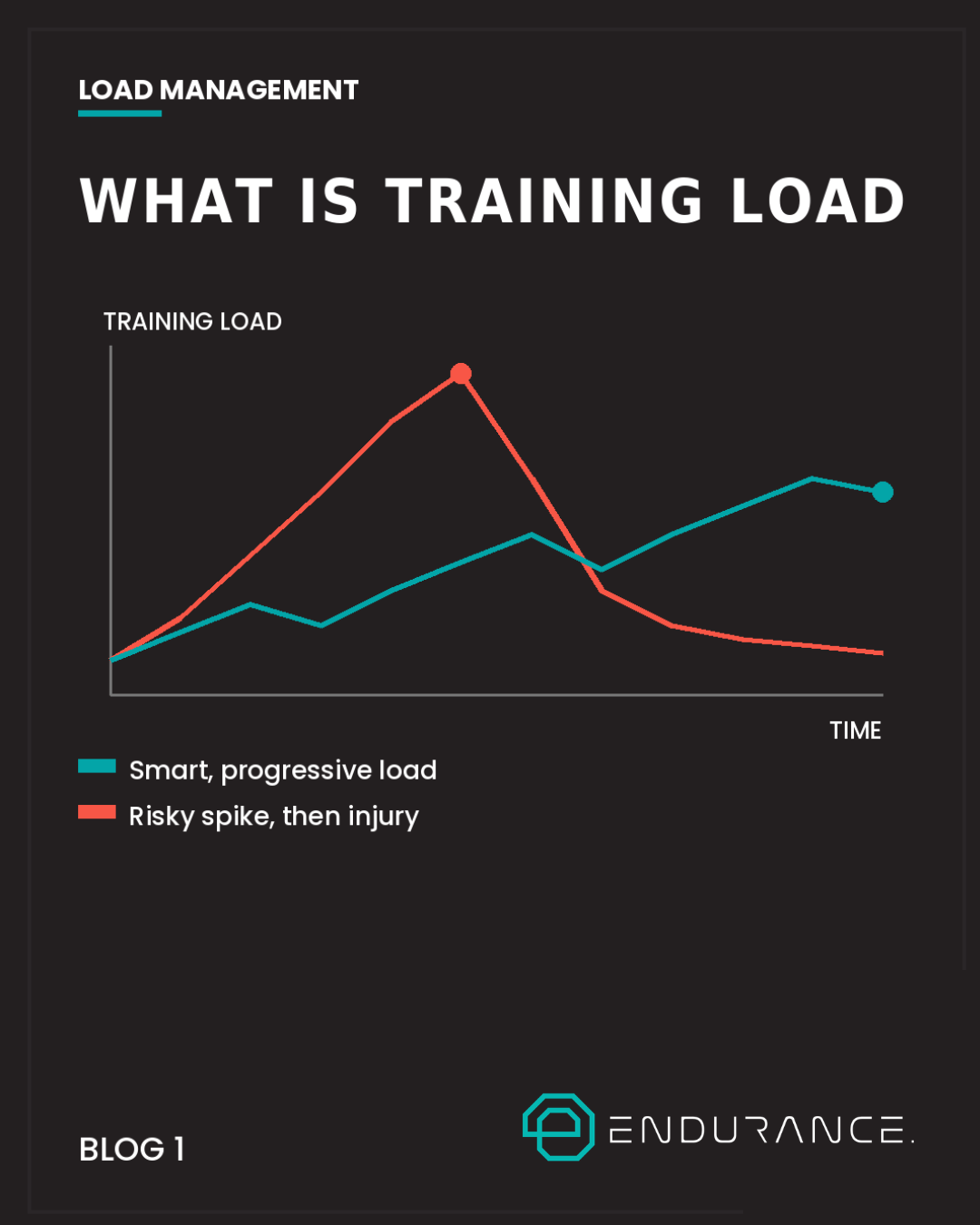
When your acute load is significantly higher than your chronic load, when what you are asking your body to do this week is dramatically more than what it has been doing on average, injury risk rises sharply. Gabbett's research found that athletes whose acute to chronic workload ratio exceeded 1.5 were at substantially higher injury risk than those who kept the ratio between 0.8 and 1.3.
In plain language: the body can handle a lot. What it struggles with is sudden, dramatic change in what it is asked to do.
Why This Explains Most of the Injuries I See
When athletes come into my clinic with a new injury, the conversation almost always leads back to one of the following patterns:
The pre-season spike — returning to full training after a break without gradually rebuilding the load the tissue was previously adapted to. This is the most predictable injury trigger in sport and one of the most preventable.
The race build rush — realizing a goal event is closer than expected and cramming in training volume over two or three weeks that should have been built over two or three months.
The tournament overload — playing three games in two days without adequate recovery infrastructure, asking the body to perform at a level of accumulated fatigue it has not been conditioned for.
The multi-sport youth athlete — training and competing across multiple teams simultaneously, with each coach aware only of their portion of the load while the total accumulates invisibly.
The comeback too soon — returning to full training after illness, injury, or time off before the tissue has re-adapted to the demands that will be placed on it.
None of these are bad luck. Every single one is a load management problem — and every single one is preventable.
The Training Stress That Nobody Counts
Here is something that consistently surprises athletes: physiological stress and psychological stress are processed by the same nervous system. Your body does not distinguish between the physical stress of a hard interval session and the emotional stress of a difficult week at work or school. It pools all of it.
Research on the relationship between life stress and athletic injury is clear. Athletes experiencing high life stress alongside low social support have significantly higher injury rates than those with lower life stress or stronger support networks. This does not mean that personal difficulties should stop you from training. It means that when life load is high, training load should be adjusted to reflect that reality.
The athlete who is navigating exam pressure, a difficult relationship, a demanding period at work, or poor sleep is not starting each training session from the same physiological baseline as an athlete whose life outside training is calm and well-supported. Pretending otherwise is how overuse injuries accumulate.
Life Stress Counts Toward Your Total Load
I see this pattern consistently in the athletes I work with, particularly youth athletes in competitive academic environments and adult athletes with demanding careers and family responsibilities. The training volume looks fine on paper. But the total load, when work stress, sleep debt, and emotional demand are factored in, is far beyond what the body can absorb and recover from.
This is not weakness. This is physiology. And acknowledging it is the first step toward training in a way that actually produces the adaptations you are working for rather than the injuries you are working to avoid.
Up Next: Reading Your Body's Signals
You now understand what training load actually is and why the most common injury triggers in sport are almost always load management problems in disguise. Part 2 of Load Management covers the other side of the equation, what your body is telling you when load has exceeded recovery, the signals that most athletes dismiss until it is too late, and how to develop the body awareness that separates athletes who stay healthy from those who cycle through the same injuries year after year. See you there.
______
Most of the injuries I treat are predictable and preventable. If you are dealing with a recurring injury or want to understand whether your current training load is working for or against you, reach out to book an assessment at Endurance Therapeutics.
📍 Endurance Therapeutics | Oakville