

Part 2: How to Read Your Body: The Signals That Tell You Load Has Exceeded Recovery
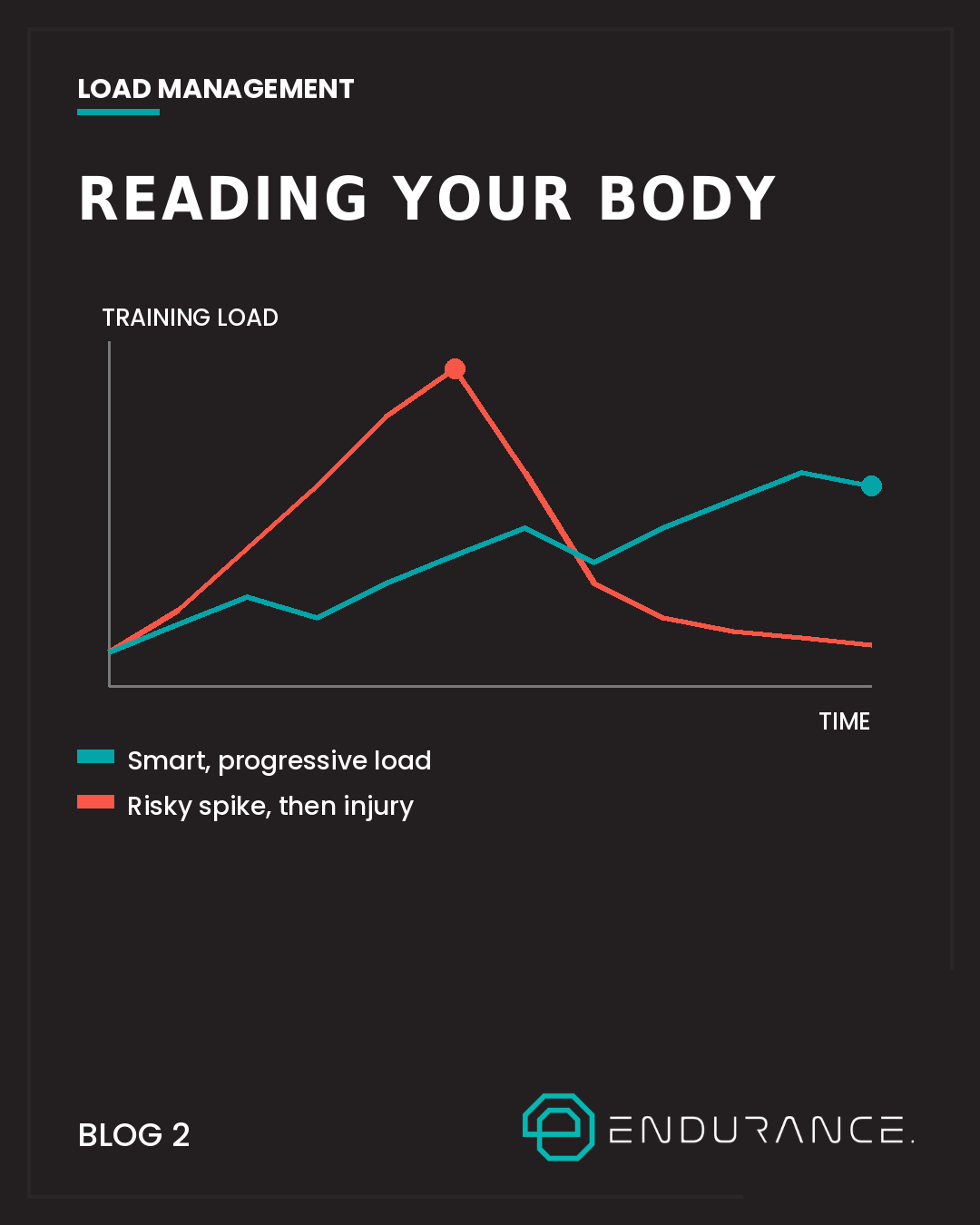
Welcome back to Load Management. In Part 1 we established what training load actually is, not just volume but the combination of volume, intensity, frequency, and recovery, and why load spikes rather than load itself are the primary driver of most athletic injuries. Now we turn to the skill that sits at the heart of smart load management: learning to read your body.
This is a skill, not a talent. It is developed through practice, attention, and a willingness to be honest about what you are feeling rather than what you wish you were feeling. And it is one of the most valuable things an athlete can develop over a career.
The Problem With How Most Athletes Interpret Body Signals
Most athletes fall into one of two patterns when it comes to interpreting what their body is telling them. The first is dismissal, pushing through signals because the training plan says to, because a race is approaching, or because stopping feels like weakness. The second is catastrophizing, interpreting every twinge as a serious injury and pulling back at the first sign of discomfort.
Neither pattern serves the athlete well. The goal is something in the middle: a calibrated, honest, evidence-based reading of the difference between productive discomfort and genuine warning signals. That distinction is what determines whether you are building fitness or accumulating damage.
Productive Discomfort vs. Warning Signals
Productive discomfort is the normal experience of training stress. It is diffuse, manageable, and improves or resolves within a predictable timeframe. It is not surprising given what you have been doing. It does not localize to a specific structure with any consistency. Examples:
Muscle soreness that peaks 24 to 48 hours after a hard session and resolves within 72 hours
General fatigue and heavy legs the day after a long run or hard race
Cardiovascular discomfort during high-intensity intervals that resolves quickly with rest
A sense of effort during sessions that is proportionate to the training demand
Warning signals are different in quality, not just quantity. They tend to be localized, persistent, progressive, or disproportionate to the training that preceded them. Learning to recognize these is what keeps injuries minor:
Pain that is sharp, pinching, or specifically localized to a joint or tendon rather than diffuse through a muscle belly
Soreness that does not resolve between sessions and is present before you start training, not just after
Pain that is consistently worse in a specific position or movement rather than generally distributed
A pattern of feeling worse as a session progresses rather than warming up through the discomfort
Any night pain — pain that wakes you from sleep or is present at rest is a signal that warrants proper assessment
The Physical Markers of Overload
Beyond the acute pain signals, the body gives more subtle indicators that load has exceeded recovery over time. These are the signs that something has been building for weeks or months before an acute injury arrives:
Elevated resting heart rate:
If your morning resting heart rate is consistently 5 to 10 beats above your typical baseline, your nervous system is under stress that is not being resolved by recovery. This is one of the most reliable early warning signals available to any athlete.
Performance plateau or decline despite consistent training:
If your times are getting slower, your power is dropping, or your perceived effort for the same workload is increasing, the adaptation equation is not working. You are accumulating fatigue faster than you are building fitness.
Persistent muscle tightness that does not resolve with normal recovery:
The hip flexors that are always tight, the calves that never fully loosen, the hamstrings that feel pulled regardless of stretching. These chronic restriction patterns are often signs of tissue that is perpetually under-recovered.
Frequent minor illness:
The immune system is suppressed during periods of overtraining. Athletes who are getting sick more often than usual, or whose illnesses are taking longer to resolve, are often in a state of accumulated load that has compromised their immune function.
Sleep disruption:
Difficulty falling asleep or staying asleep despite training fatigue is a sign of elevated cortisol, a reliable marker of physiological stress that is not being adequately managed.
The Psychological Markers of Overload
These are the signals that tend to be dismissed most readily because they feel less concrete than physical pain. They are not less important:
Loss of motivation to train — when a sport you love starts to feel like an obligation you are dreading, the nervous system is telling you something real. Athletes who override this signal repeatedly are the ones who burn out or develop overtraining syndrome.
Irritability and mood changes disproportionate to life circumstances — overtraining has measurable effects on mood, including increased anxiety, irritability, and depressive symptoms. These are not personal failings. They are physiological responses to chronic unmanaged load.
Difficulty concentrating — cognitive performance declines under significant physical overload. If your focus and mental clarity are deteriorating alongside training, the body is redirecting resources away from higher-order function to manage the physical demand.
A pervasive sense of being unwell — not sick, not injured, just not right. This one is hard to articulate but experienced athletes know it. When everything feels slightly off without a specific identifiable cause, the total load picture is almost always the explanation.
HRV and Wearable Data: Useful but Not the Whole Picture
Heart rate variability monitoring and other wearable metrics have become increasingly accessible and genuinely useful for tracking recovery status. A significant downward trend in HRV over multiple days is a reliable indicator that the body is under more stress than it is recovering from. Resting heart rate trends, sleep score patterns, and training readiness scores from devices like Garmin, Whoop, and Oura all provide meaningful data.
The important caveat is that these tools inform the picture, they do not replace body awareness. The athlete who learns to read their own signals and uses wearable data to confirm or contextualize what they are feeling is better equipped than one who trusts the device more than their own body. Use the data. But also trust what you feel.
Up Next: Building a Load Management Plan That Actually Works
You can read the signals. Now it is time to build the systems that prevent them from becoming necessary. Part 3 of Load Management covers the practical tools ; how to structure training weeks, how to build and use deload weeks, how to think about total load across all life demands, and how to adapt intelligently when the plan meets reality. See you there.
______
If your body has been sending signals that you have not known how to interpret, or if you are in a recurring injury cycle that feels like bad luck, it is almost certainly a load management story. Come in and let us look at the full picture together. Reach out to book an assessment with Dr. Keirstyn at Endurance Therapeutics today!
📍 Endurance Therapeutics | Oakville