

Blog 1: The Athlete's Guide to Meniscus Injuries
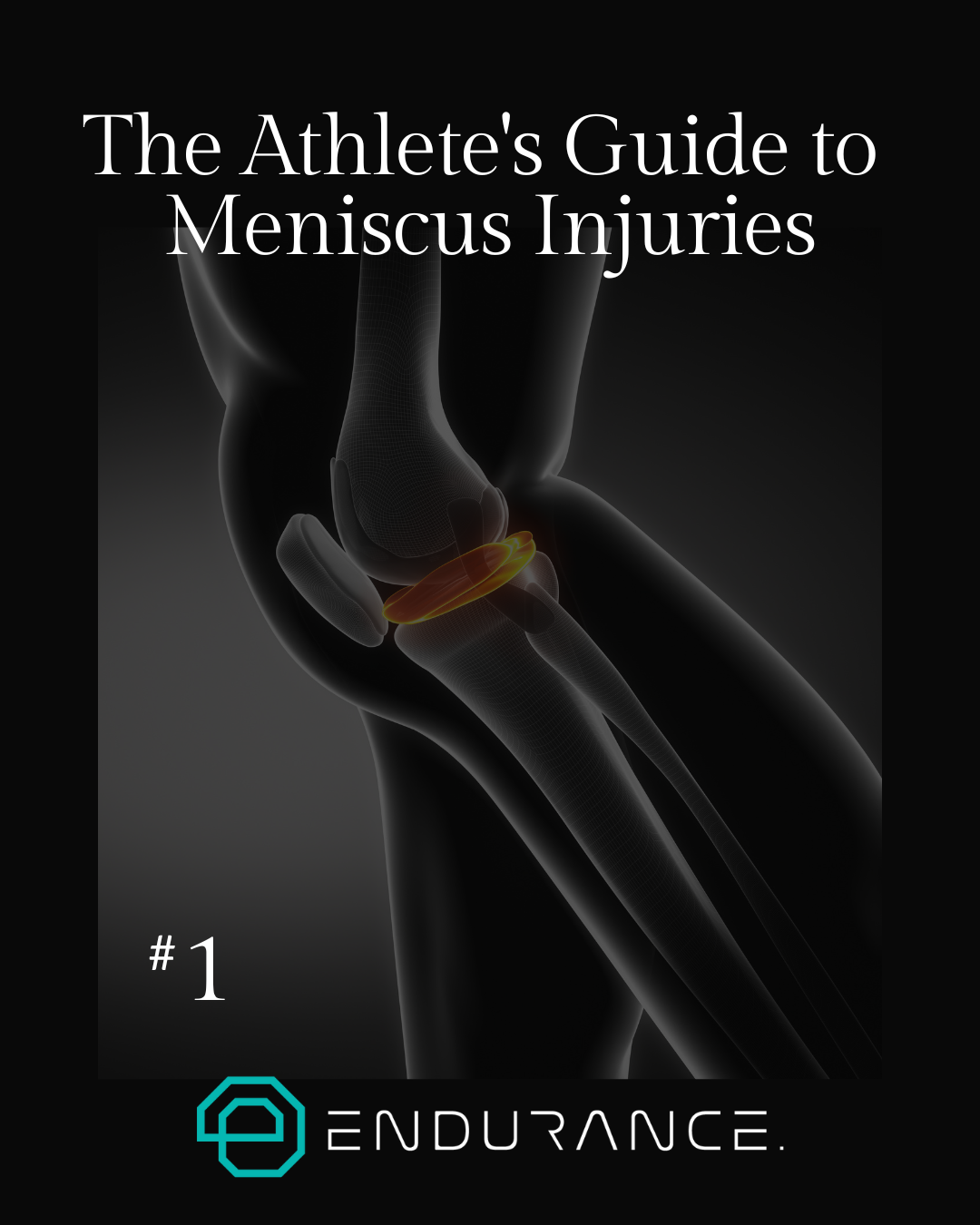
Part 1: Anatomy & Physiology - What Your Meniscus Actually Does
Welcome to Understanding Meniscus Injuries with me, Dr. Keirstyn from Endurance Therapeutics!
One wrong pivot. One awkward squat. One seemingly simple movement — and suddenly your knee is swollen, catching, and holding you back from the sport you love.
If you're reading this, you've probably felt it: that sharp twist during a cutting movement on the court, the deep ache after a heavy squat, or maybe just the odd sensation of something "catching" when you stand up. Now your knee is swollen, stiff, painful — and you're wondering if you've torn your meniscus.
You're not alone. Meniscus tears are one of the most common knee injuries in athletes and active individuals. They sideline basketball players mid-season, force runners off the roads, bench hockey players during playoffs, and frustrate weightlifters who can't hit depth anymore.
But here's what most athletes don't know:
Not all meniscus tears are the same. Not all require surgery. And many can be managed conservatively with the right approach — if you understand what you're dealing with and get the right guidance early.
Whether you're a competitive athlete dealing with a fresh injury, someone managing chronic knee issues, or simply trying to understand why your knee isn't acting right, this comprehensive guide will give you the knowledge you need.
We'll break down the anatomy (what your meniscus actually does), common causes across different sports (why this injury happens), and most importantly — how I can help you prevent, treat, and recover from meniscus injuries so you can get back to training and competing.
Let's start with understanding what your meniscus is and why it matters so much for athletic performance.
Part 1: Anatomy & Physiology - What Your Meniscus Actually Does
What is the Meniscus?
Your meniscus is a C-shaped piece of cartilage that sits between your thigh bone (femur) and shin bone (tibia). You actually have two in each knee:
Medial Meniscus: Located on the inside (medial) part of your knee
Lateral Meniscus: Located on the outside (lateral) part of your knee
Structure: Think of them as shock absorbers and spacers. They're made of fibrocartilage — tougher than the smooth cartilage that covers your bones, but not as hard as bone itself.
What Does the Meniscus Do?
1. Shock Absorption
The meniscus absorbs and distributes forces across your knee joint. When you run, jump, or land, forces of 2-6x your body weight travel through your knee. The meniscus spreads this force over a larger area, protecting your bones and cartilage from excessive stress.
Without a healthy meniscus: Forces concentrate in smaller areas, accelerating joint wear and increasing arthritis risk.
2. Joint Stability
The meniscus deepens the socket where your femur sits on your tibia, improving knee stability during movement. It also provides proprioceptive feedback (tells your brain where your knee is in space).
3. Joint Lubrication
The meniscus helps distribute synovial fluid (joint lubricant) evenly across the knee, reducing friction and maintaining joint health.
4. Load Distribution
During weight-bearing activities, the meniscus carries about 50% of the load in your knee when standing and up to 85% when squatting or lunging.
Blood Supply: Why It Matters for Healing
This is critical to understand:
The meniscus has three zones based on blood supply:
Red Zone (Outer 1/3):
Good blood supply
Can heal with proper treatment
Tears here have better prognosis
Red-White Zone (Middle 1/3):
Moderate blood supply
Sometimes heals, sometimes doesn't
Variable prognosis
White Zone (Inner 2/3):
No blood supply
Cannot heal on its own
Tears here often managed conservatively or surgically removed
Why This Matters: A tear in the red zone might heal with proper conservative care and rehabilitation. A tear in the white zone won't heal on its own but may become asymptomatic with the right management — meaning you can return to your sport without surgery. Understanding where your tear is located helps determine the best treatment approach.
Types of Meniscus Tears
Meniscus tears are classified by their pattern, and each type has different implications for healing and treatment.
Degenerative Tears:
Develop gradually from wear and tear over time
Common in people 40+ years old
Often discovered incidentally on MRI without causing symptoms
Horizontal or complex tear patterns
Usually managed conservatively with excellent outcomes
Traumatic Tears:
Happen from a specific injury event (twist, pivot, direct impact)
Common in younger athletes (teens to 30s)
Vertical, radial, or bucket-handle tear patterns
May require surgery depending on location, symptoms, and functional limitations
Common Tear Patterns:
Horizontal tear: Often degenerative, runs parallel to tibial plateau
Radial tear: Runs perpendicular to outer edge, reduces shock absorption capacity
Vertical tear: Runs from top to bottom, may heal if located in red zone
Bucket-handle tear: Large vertical tear where a portion flips into the joint (often causes mechanical locking and typically requires surgical intervention)
Complex tear: Combination of multiple tear patterns, often degenerative in nature
Medial vs. Lateral Meniscus Tears
Medial Meniscus (Inside of Knee):
More commonly torn (accounts for approximately 70% of all meniscus tears)
More tightly attached to joint capsule and MCL (less mobile, more prone to injury during twisting)
Often tears with rotational or twisting injuries while weight-bearing
Lateral Meniscus (Outside of Knee):
Less commonly torn
More mobile due to less attachment to surrounding structures
Often tears with higher-impact injuries or in combination with ACL tears
Now that you understand what the meniscus is, how it's structured, and the different types of tears that can occur, let's look at which sports create the highest risk — and why certain movements make athletes vulnerable to this injury.
Your Next Step
If you're currently dealing with meniscus injuries:
Book an assessment with Dr. Keirstyn at Endurance Therapeutics. We'll identify the root cause, create a tailored rehab plan, and get you back to pain-free training.
If you want to prevent meniscus issues:
Schedule a movement screening. We'll identify weak links and give you a plan to keep your hips and knees healthy for decades.
Don't let knee pain sideline you. With the right approach, most knee issues are fixable — and preventable.
📍 Endurance Therapeutics | Oakville, Ontario
📞 905-288-7161 | 🔗 https://endurance.janeapp.com/#staff_member/1
Train smart. Move well. Stay healthy.