

Blog 5: Everything Golf ⛳
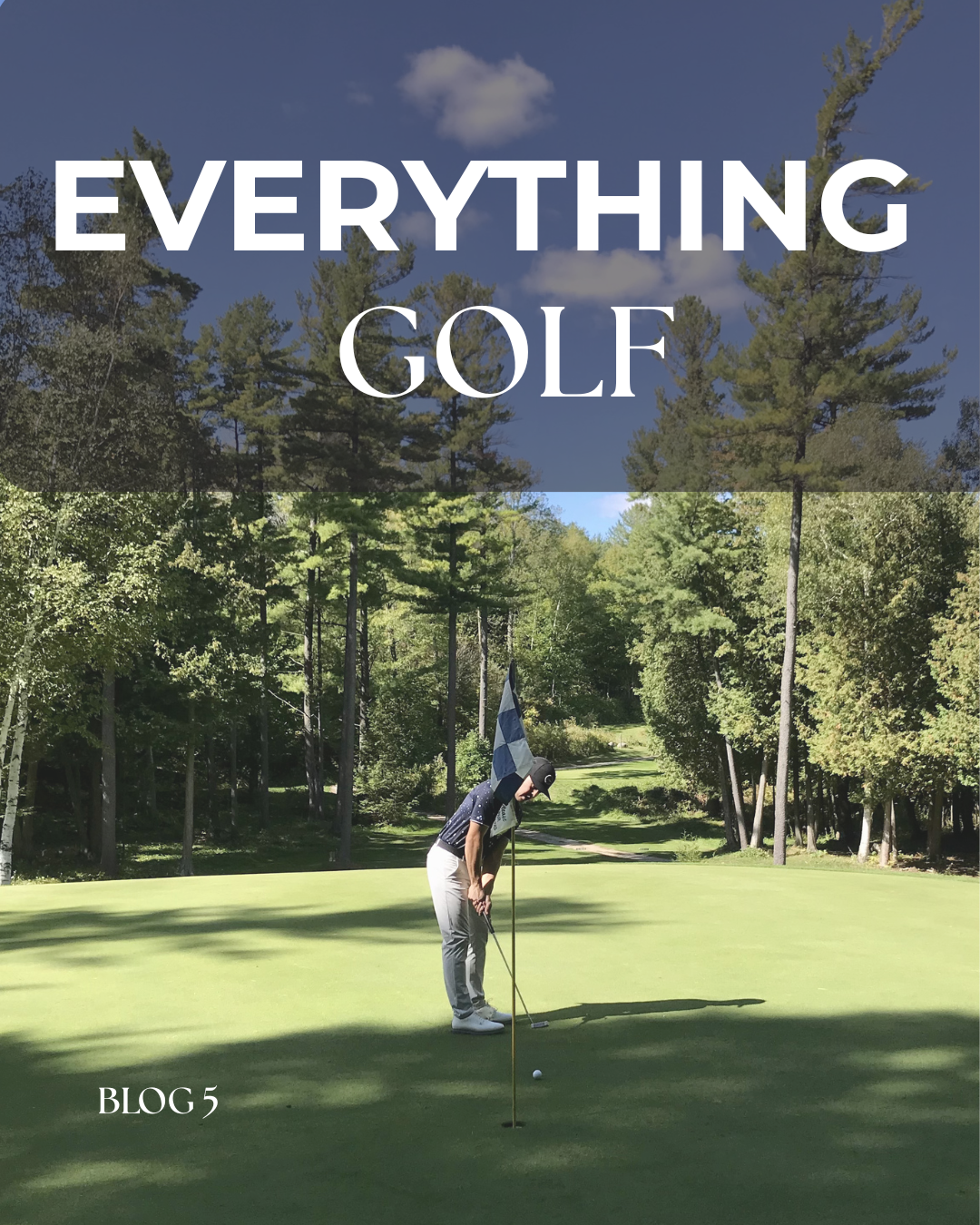
Part 5: Golf for Life: How to Keep Playing for Decades
Welcome to the final part of Everything Golf!
We've covered the demands of the swing in Part 1, the big three injuries in Part 2, building your body in Part 3, and smart training and mental performance in Part 4. Part 5 is the one I find most meaningful, the long game. How do you keep playing this sport well into your 60s, 70s, and beyond?
Golf is genuinely one of the best sports for longevity. It keeps you moving, outdoors, socially connected, and mentally engaged well into later life. Research consistently shows golfers live longer on average than non-golfers. But that only holds if you can stay healthy enough to keep playing and that requires some deliberate choices.
What Changes As You Age: And What to Do About It:
Golf asks the same things of a 65-year-old body that it asks of a 35-year-old body. The swing doesn't get easier but the body's capacity to absorb it without preparation changes significantly. Here's what shifts and how to adapt:
Thoracic Mobility Decreases: The mid-back naturally stiffens with age, which reduces shoulder turn and forces the lumbar spine to compensate more. This is the single most important mobility target for masters golfers. Daily thoracic rotation work is non-negotiable after 50.
Muscle Mass Declines: After 40, muscle mass decreases at roughly 1% per year without resistance training. For golfers, this means reduced power, reduced stability, and reduced tissue protection. Strength training twice per week maintains the capacity the swing demands.
Recovery Takes Longer: The tissue repair processes that happen between rounds slow with age. What a 35-year-old recovers from in 24 hours may take a 60-year-old 48–72 hours. Playing schedule needs to reflect this, particularly during busy periods.
Degenerative Changes Accumulate: Hip arthritis, disc degeneration, and elbow tendon changes are common in masters golfers. None of these are automatic reasons to stop playing — but they do mean the preparation and maintenance work becomes more important, not less.
Balance and Proprioception Change: The weight transfer mechanics of the swing rely on good balance and ground feel. This is trainable well into older age with single-leg stability work and specific balance training.
The Habits That Keep Golfers Playing:
The golfers I see who are still playing well and pain-free into their 70s share a handful of consistent habits:
They warm up every time, without exception. Not optional, not rushed. The older the body, the more it needs transition time from rest to rotational load.
They strength train year-round, not aggressively, not competitively. Two sessions per week of targeted work that addresses the demands of the swing. This is the single highest-return investment available to a masters golfer.
They address issues early. A hip that feels a bit tight doesn't get played through for three months. It gets assessed. Catching compensations early is exponentially easier than managing a fully developed injury.
They adapt their game rather than forcing their old game, accepting that a shorter backswing protects the lumbar spine, that a wider stance improves stability, or that a lighter shaft improves mechanics is intelligence, not concession.
They treat maintenance as part of their golf life. Regular chiropractic care, soft tissue work, and movement assessment are scheduled like tee times. Because they are.
Adapting Your Swing for Longevity:
Some swing modifications that reduce injury risk without sacrificing enjoyment:
Shortening the Backswing: A three-quarter backswing driven by thoracic rotation rather than a full backswing driven by lumbar compensation is both safer and often more consistent
Widening the Stance: Provides a more stable base and reduces the hip rotation demand, particularly helpful for golfers with hip arthritis or restriction
Softening Grip Pressure: Reduces forearm activation and medial elbow loading throughout the swing, directly addressing golfer's elbow risk
Choosing the Right Equipment: Properly fitted clubs for your current swing, appropriate shaft flex, and grip size all reduce compensatory movement patterns. A club fitting after a significant injury or after age 60 is genuinely worthwhile
A Final Word — From the Treatment Table:
I've worked with golfers who are still playing 18 holes well into their 70s with the physical preparation habits of a dedicated athlete. I've also worked with golfers who had to stop in their 50s because years of playing through pain and skipping maintenance eventually added up.
The difference was never talent, handicap, or how much they loved the game. The difference was whether they treated their body as a partner in their golf life or an afterthought to it.
Golf is worth playing for as long as you possibly can. Your body, with the right care, is capable of making that happen!
———
Whether you're managing a current injury, trying to get more from your body on the course, or simply want to keep playing for decades, I work with golfers at every stage. Reach out to book an assessment and let's build your longevity plan!
📍 Endurance Therapeutics | Oakville, Ontario
📞 905-288-7161