

Blog 3: The Athlete's Guide to Meniscus Injuries
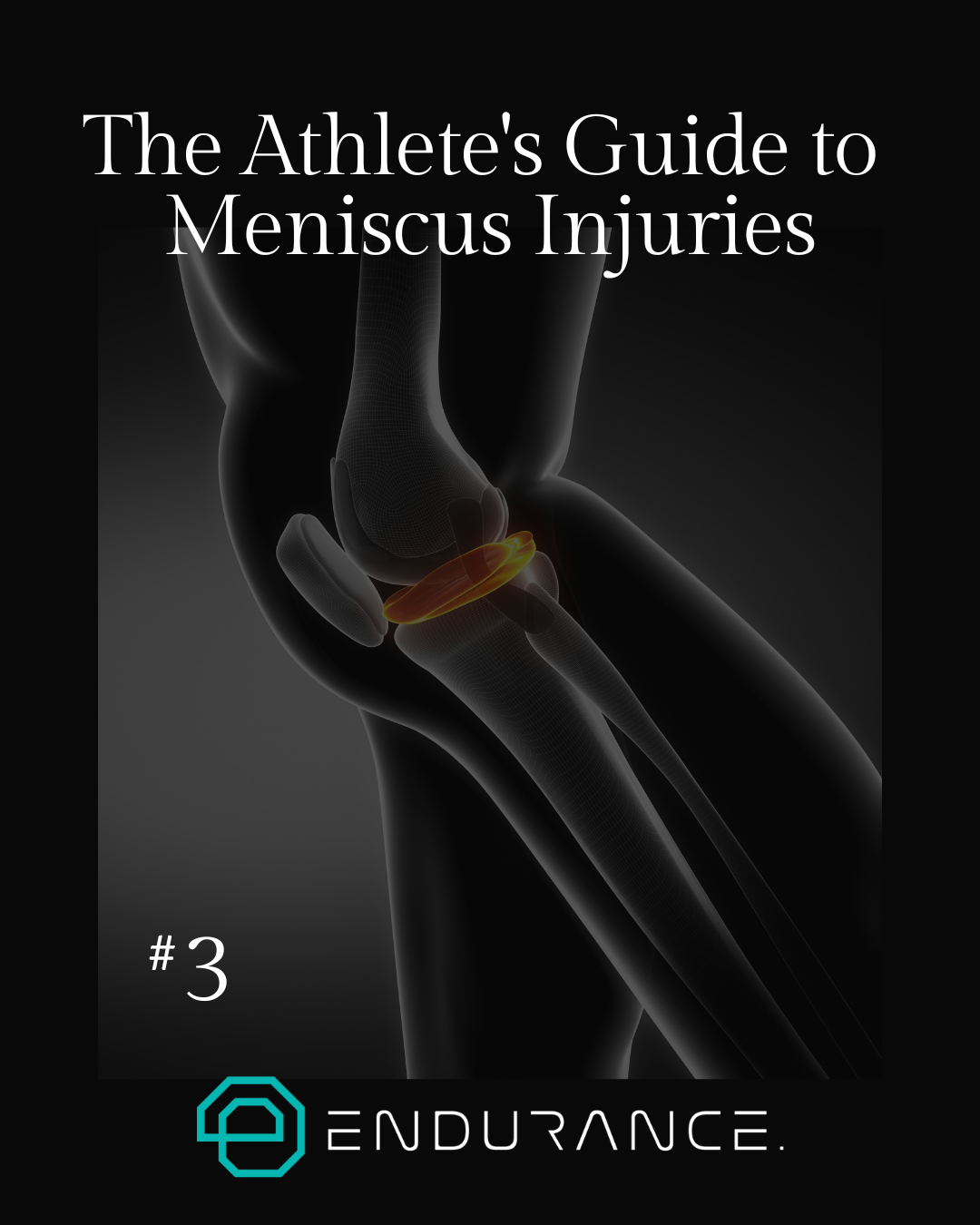
Part 3: How Dr. Keirstyn Helps - Prevention, Treatment & Education
Welcome back for the final part of the blog series The Athletes Guide to Meniscus Injuries written by Dr. Keirstyn!
If your have missed any either Part 1 or Part 2, feel free to go back and read what we have already covered. Otherwise, enjoy reading how I help you as athlete deal with meniscus injuries as well as preventing them through education and my treatment style.
Assessment and Diagnosis
At Endurance Therapeutics, I work with athletes and active individuals to assess, manage, and prevent meniscus injuries.
Comprehensive Knee Assessment Includes:
Subjective History:
How did the injury occur? (traumatic vs. gradual onset)
What movements make it worse?
Any locking, catching, or giving way?
Previous knee injuries or surgeries?
Physical Examination:
Joint line tenderness (medial vs. lateral)
Range of motion assessment
Swelling and effusion
Special tests (McMurray's, Apley's, Thessaly test)
Strength testing (quads, hamstrings, glutes)
Movement pattern analysis (squat, lunge, single-leg stance, gait analysis)
Functional Assessment:
How does knee respond to loading (squat, step-down)?
Can you perform sport-specific movements?
Gait analysis (walking, running if appropriate)
When Imaging is Needed:
I will suggest referral for an MRI if:
Suspicion of significant tear requiring surgical consultation
Symptoms don't improve with conservative care
Mechanical symptoms (locking, severe catching)
Possibility of other structural damage (ACL, cartilage)
Important: Many meniscus tears show up on MRI but cause no symptoms. MRI findings must match clinical presentation.
Conservative Treatment Approach
Not all meniscus tears require surgery. Research shows that many tears — especially degenerative tears in people over 40 — respond well to conservative management.
Phase 1: Acute Management (First 1-2 Weeks)
Goals: Reduce pain and swelling, protect healing
What I Can Provide as a Practitioner:
Joint mobilization to reduce stiffness
Soft tissue work on surrounding muscles (quads, hamstrings, calves)
Modalities if needed (ice, compression)
Activity modification guidance (what to avoid, what's safe)
Education on tissue healing timeline
Phase 2: Progressive Loading (Weeks 3-6)
Goals: Restore range of motion, build strength, improve function
What I Can Provide as a Practitioner:
Progressive joint mobilization
Movement pattern retraining (proper squat, lunge mechanics)
Exercise prescription (specific to your tear type and goals)
Biomechanical assessment (identify why tear happened)
Return-to-activity guidance
Rehabilitation Exercises:
These are just examples of common exercises that may be prescribed. However, everyone is different and therefore it is important to get a detailed assessment in order to determine what will work best for you.
Range of Motion:
Heel slides: 3 sets x 10 reps
Prone knee flexion: 3 sets x 10 reps
Also focus on hip mobility
Strengthening:
Hamstring curls: 3 sets x 12 reps
Single Leg Glute bridges: 3 sets x 15 reps
Monster Walks: 3 sets x 15 reps each side
Single Leg Extensions: 3 sets x 15 reps each side
Functional Progression:
Partial squats → full squats (pain-free range)
Step-ups (low step → higher step)
Single-leg balance (eyes open → eyes closed)
Lateral step-downs
Phase 3: Return to Sport (Weeks 6-12+)
Goals: Build sport-specific capacity, prevent re-injury
What I Can Provide as a Practitioner:
Sport-specific movement assessment
Progression guidance (when to advance, when to modify)
Ongoing biomechanical optimization
Maintenance care during return to sport
Sport-Specific Progression:
For Cutting Sports (Basketball, Soccer, Hockey):
Straight-line jogging → running → sprinting
Change of direction drills (gradual progression)
Cutting and pivoting (controlled → reactive)
Sport-specific movements (gradually increasing intensity)
For Jumping Sports (Volleyball, Basketball):
Bodyweight jumps (double-leg → single-leg)
Landing mechanics training (focus on soft landings, knee alignment)
Plyometric progression (low height → higher)
Sport-specific jumping patterns
For Weightlifting/CrossFit:
Partial range squats → full depth (pain-free)
Bodyweight → loaded progressively
Tempo work (control eccentric phase)
Sport-specific lifts (Olympic lifts last)
Return-to-Sport Criteria:
Sport-specific movements with a pain score of under a 4/10
Full range of motion (equal to uninjured side)
Strength within 10% of uninjured side
Able to perform functional tests without compensation
Confidence in knee stability
Biomechanical Assessment: Preventing Future Tears
This is where I am able to identify WHY the tear happened:
Common Biomechanical Faults:
Knee valgus (collapse inward): Weak hip abductors → meniscus stress
Limited ankle mobility: Forces knee to compensate during squatting
Poor landing mechanics: Stiff-legged landings → excessive impact
Hip weakness: Glutes can't stabilize during cutting/pivoting
Quad dominance: Hamstrings underactive → altered knee mechanics
Treatment Addresses Root Causes:
Hip strengthening (glute med/min activation)
Ankle mobility work
Landing mechanics retraining
Core stability for better knee control
Sport-specific movement pattern correction
When Surgery May Be Necessary
Reasons why I will suggest a referral for orthopedic consultation are:
Mechanical locking (knee stuck, can't straighten)
Displaced bucket-handle tear
Failed conservative management (3+ months without improvement)
Large traumatic tear in young athlete
Significant functional limitations despite rehab
Important: Even if surgery is needed, pre-surgical rehab (prehab) improves post-surgical outcomes. I can guide you through prehab and post-surgical rehab. The stronger you are going into surgery the better prognosis after surgery.
Education: Understanding Your Injury
At Endurance Therapeutics, education is a core part of treatment. My goal is to help you understand:
Your Specific Tear:
Type, location, severity
What activities are safe vs. risky
Realistic healing timeline
When surgery is vs. isn't necessary
Movement Patterns:
What movements stress your meniscus
How to modify technique to reduce stress
Proper mechanics for your sport
Long-Term Management:
What you can do to prevent re-injury
How to maintain knee health
When to modify vs. push through discomfort
Expectations:
Some tears heal, some don't, but many become asymptomatic with proper management
Rehab takes time (typically 6-12 weeks for conservative management)
Return to sport should be gradual, not rushed
Preventing Meniscus Injuries
Strength Training:
Hip abductors (glute med/min): Prevent knee valgus
Quads and hamstrings: Control knee movement
Core stability: Foundation for lower body control
Movement Quality:
Proper landing mechanics (soft landings, knee alignment)
Cutting and pivoting technique (controlled, not reactive until trained)
Squat and lunge form (knees tracking over toes)
Training Load Management:
Avoid sudden volume increases (10% rule)
Adequate recovery between sessions
Don't train through knee pain or instability
Maintenance Care:
Regular movement assessments (catch issues early)
Address biomechanical faults before injury
Proactive strengthening and mobility work
Wrapping Up: Your Meniscus Health Matters — And You Don't Have to Navigate It Alone
Meniscus tears don't have to mean the end of your athletic career, months on the sidelines, or automatic surgery. Understanding what your meniscus does, how tears happen, and which treatment approach is right for YOU can make all the difference between a quick return to sport and a prolonged, frustrating recovery.
Here's What You Should Take Away:
1. The meniscus is critical — it's your knee's shock absorber, stabilizer, and load distributor. Protecting it protects your entire knee joint.
2. Not all tears are created equal — location matters (red zone vs. white zone), tear pattern matters (traumatic vs. degenerative), and your age, activity level, and goals all influence the best treatment path.
3. Your sport creates specific risks — cutting and pivoting sports (basketball, soccer, hockey) have the highest traumatic tear rates, while high-volume training (running, weightlifting) increases degenerative risk.
4. Conservative care works for many tears — research shows that degenerative tears, especially in athletes over 40, often respond excellently to rehabilitation, strength training, and biomechanical optimization — no surgery needed.
5. Biomechanics matter — weak hips, poor landing mechanics, limited ankle mobility, and training errors all contribute to meniscus tears. Addressing these factors prevents re-injury and protects the opposite knee.
The bottom line: Whether you're dealing with a current meniscus injury, recovering from a past tear, or trying to prevent one from ever happening, you need a practitioner who understands the demands of your sport, thinks beyond just symptoms, and creates individualized plans based on YOUR goals.
That's exactly what I aim to provide my athletes with at Endurance Therapeutics.
I do not just treat the injury — I educates you on why it happened, what you can do to prevent it, and how to build a body that can handle the demands of your sport for years to come.
Don't let knee pain keep you on the sidelines. Early assessment, proper treatment, and smart rehabilitation make the difference between a minor setback and a chronic problem.
Book an assessment with me and let's identify what's happening with your knee, create a personalized treatment plan, and get you back to doing what you love — safely and confidently.
📍 Endurance Therapeutics | Oakville, Ontario
📞 905-288-7161 | 🔗 https://endurance.janeapp.com/#staff_member/1
Train smart. Move well. Stay healthy.