

Blog 1: Groin & Adductor Strains: The Injury Behind Your Hip and Knee Pain
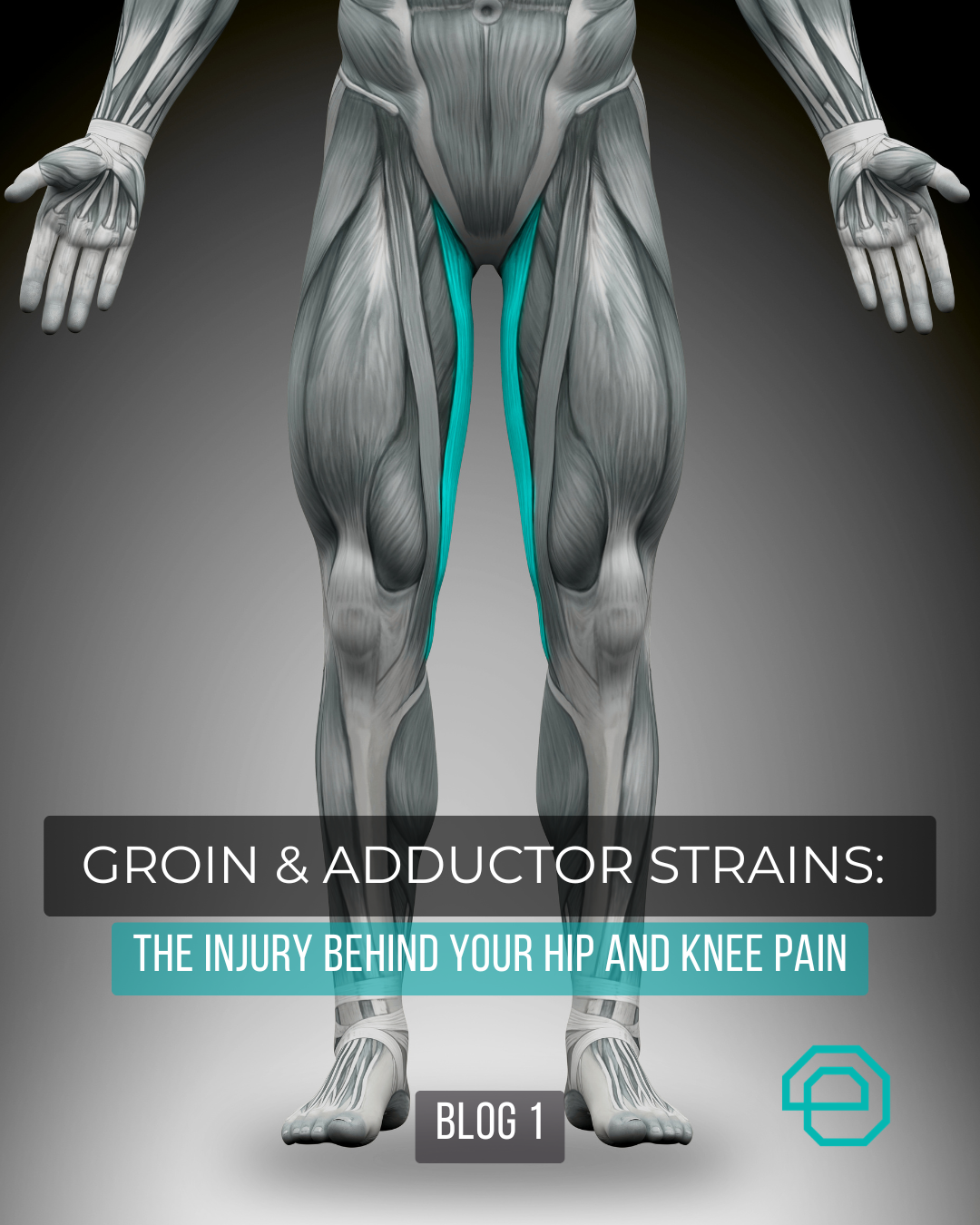
Part 1: The Groin & Adductor Strain — What's Actually Happening
In this series Dr. Keirstyn of Endurance Therapeutics is going to cover the anatomy and symptoms, common patterns to navigate, and how to get rid of/prevent groin and adductor injuries in sport.
It starts with a twinge. Maybe during a hard skating stride, a sprint off the line, or a longer run than your body was ready for. You call it a groin pull, you rest for a week, it feels better and then the moment you push hard again, it's back. Sound familiar?
Groin and adductor injuries are one of the most common and most mismanaged injuries I see in athletes. They're also one of the sneakiest because the pain rarely tells the whole story.
What Is the Adductor Group?
The adductors are a group of five muscles that run along the inner thigh, connecting your pelvis to your femur (thighbone). Their primary job is to pull your legs toward the midline, but that's just the headline. In sport, they're doing something far more important: stabilizing your pelvis with every stride, skating push, and change of direction.
The five muscles are:
Adductor Magnus: the largest and most powerful of the group, crossing both the hip and knee
Adductor Longus: the most commonly strained, sits in the front of the inner thigh
Adductor Brevis: deeper and shorter, runs from the pubic bone to the upper femur
Gracilis: long and thin, runs all the way down to the knee — which is why adductor injuries can cause knee pain
Pectineus: sits at the very top of the inner thigh, close to the hip flexors
When people say 'groin strain,' they usually mean the adductor longus — but any of these muscles can be involved, and several often are at the same time.
Why This Injury Masquerades as Something Else
Here's what makes adductor injuries tricky:
They don't always hurt where you expect them to. Because the gracilis runs all the way from the pelvis to the tibia just below the knee, strain or tension in the adductor group can absolutely refer pain into the inner knee. This gets misread as a knee injury constantly.
On the other end, the adductors share attachment points close to the hip flexors and the hip joint itself. This means chronic adductor tightness or strain can create pain deep in the groin that mimics hip impingement or a labral issue. I've had athletes come in convinced they have a hip problem — and it turns out the adductors are the driver.
Other areas where adductor problems show up as something else:
Inner knee aching during or after activity: often gracilis involvement, not a knee injury
Deep groin pain with hip flexion: adductor and hip flexor tension combining at the pubic attachment
Lower abdominal pulling sensation: can indicate athletic pubalgia (sports hernia), where adductor overload is a key contributor
Medial (inner) thigh tightness that doesn't release with stretching: often a sign the muscle is injured, not just tight (* this can be a common sign and feel more like knee pain)
Grades of Strain: Not All Groin Pulls Are Equal
Like most muscle injuries, adductor strains are graded by severity:
Grade 1: Mild stretch or micro-tearing. Some discomfort during activity, minimal strength loss. Yknee painou can usually keep moving but feel it.
Grade 2: Partial tear. Noticeable pain, some swelling, reduced strength. Walking is okay but sprinting, cutting, or pushing off hurts significantly.
Grade 3: Complete tear/ rupture. Severe pain, significant swelling, loss of function. Rare, but when it happens it's hard to miss.
Most of what I see in practice is Grade 1 to Grade 2. The problem is that Grade 1 injuries are so easy to train through that they quietly become Grade 2 injuries over weeks or months of not being properly addressed.
Up Next — Why These Injuries Keep Coming Back
Now that you know what's actually going on in there, Part 2 covers who gets these injuries, exactly why they happen in hockey players and runners, and — most importantly — why they have such a frustrating habit of coming back if you don't address the root cause. See you there.
———
Inner thigh pain that won't fully resolve? Don't just rest and hope. I assess adductor injuries to find out exactly what's going on and why it keeps coming back. Reach out to book your assessment with Dr. Keirstyn today!
📍 Endurance Therapeutics | Oakville, Ontario
📞 905-288-7161
🔗 https://endurance.janeapp.com/#staff_member/1