

Blog 5: Everything Triathlon
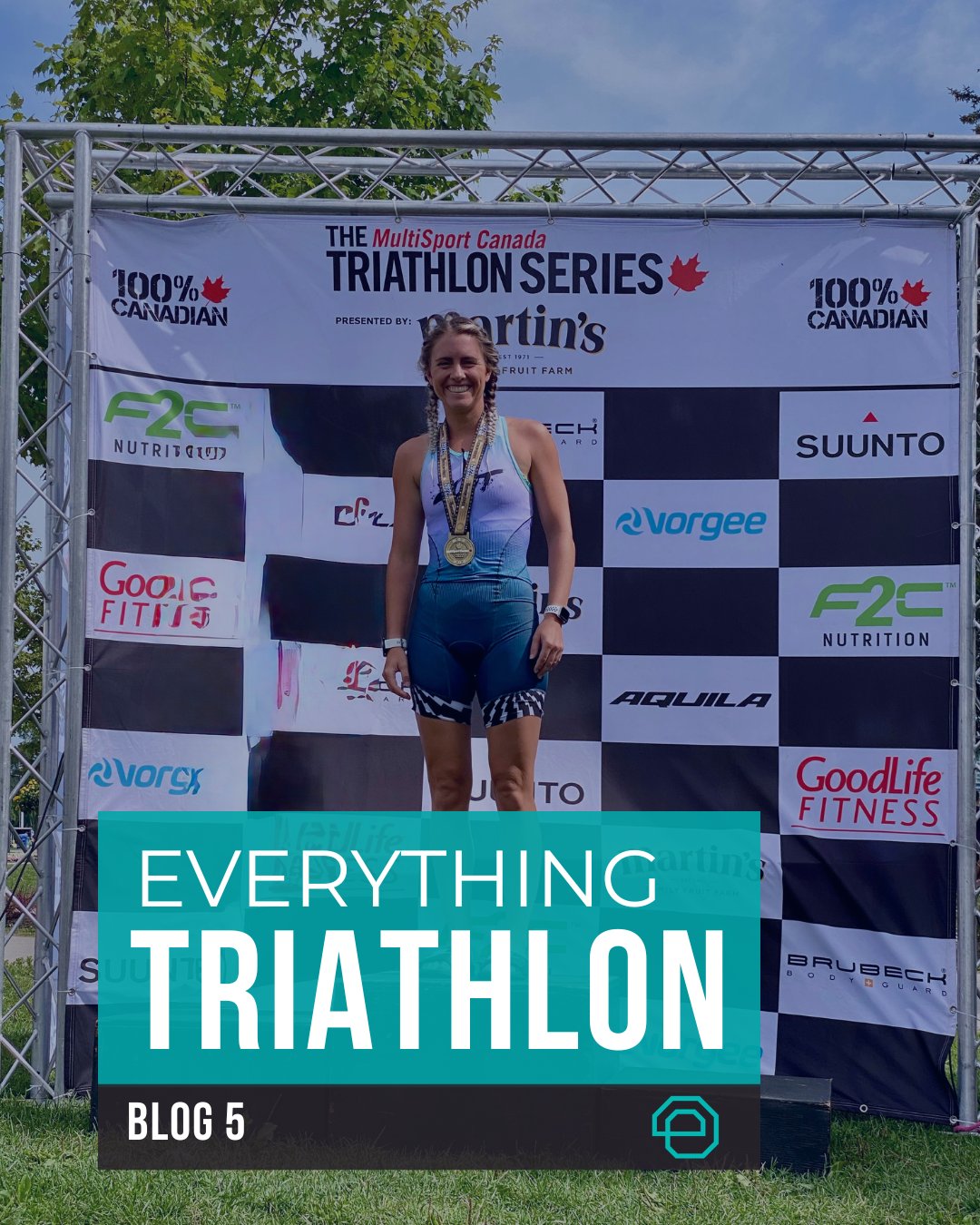
Part 5: Triathlon for Life: Racing Longer, Recovering Better & Staying in the Sport
Welcome to the final part of Everything Triathlon!
We've covered the unique injury demands of multisport in Part 1, the most common injuries in Part 2, physical preparation in Part 3, and training structure in Part 4. This last part is about the long game — and it's the one I care about most, both as a practitioner and as a triathlete.
I came into triathlon through injury. Persistent shin splints in my university track days had doctors telling me I'd probably never run again. Cross-training to stay fit while protecting my shins introduced me to cycling and swimming. And somewhere in the process of managing my own injury, I found a sport I love even more than the one I started with. Triathlon gave me a sustainable way to be an endurance athlete when running alone couldn't. It also gave me the BEST community of individuals. I am so grateful to this sport and it is why I have dedicated my career to helping other athletes like me!
That's the kind of relationship with this sport I want for every triathlete I work with — one that lasts a lifetime!
What Changes as the Triathlete Ages
Masters triathletes:
Those who are 40 and beyond are one of the fastest-growing demographics in the sport. And for good reason: triathlon rewards experience, pacing discipline, and smart training in ways that pure speed sports don't. But the body does change, and those changes need to be worked with rather than against:
Recovery takes longer: The inflammatory response after hard training takes longer to resolve. What a 30-year-old bounces back from in 24 hours may take a 50-year-old 48–72 hours. Training density needs to reflect this. More recovery days are not a sign of declining fitness — they're a sign of training intelligence.
Muscle mass declines without resistance training: After 40, muscle mass decreases at roughly 1% per year without deliberate strength work. For triathletes, this means reduced run economy, reduced power on the bike, and reduced tissue protection overall. Strength training becomes more important with age, not less.
Hormonal changes affect recovery: Particularly relevant for female triathletes in perimenopause and beyond. Changes in estrogen affect tissue healing rates, bone density, and sleep quality, all of which have direct implications for training load and recovery management.
Connective tissue adapts more slowly: Tendons and ligaments respond to load more slowly than muscle and cardiovascular fitness at any age, but this gap widens with age. The conservative approach to load management that's smart at 30 becomes essential at 50.
VO2 max decreases gradually: Roughly 1% per year after 30 without training, significantly less with consistent aerobic work. This is not a reason to slow down — it's a reason to keep training. Well-trained masters athletes typically outperform sedentary individuals 20 years younger.
The Habits That Keep Triathletes Racing
The triathletes I see who are still racing competitively and enjoying every minute of it at 60 and beyond share a clear set of habits:
They protect the run ferociously: Because it carries the highest injury risk and the longest recovery demand, they treat run volume with the most care. Easy runs are genuinely easy. Increases are gradual. They never sacrifice the run leg for extra bike volume.
They strength train year-round: Not seasonally, not when they have time. Two sessions per week regardless of what phase of training they're in. The off-season is when they rebuild any deficits. The race season is when they maintain what they've built.
They have a practitioner in their corner: Not just for when something goes wrong, but proactively. Regular movement assessments catch compensations before they become injuries. Maintenance care keeps the body functioning the way training demands.
They embrace the off-season: Every season ends with a genuine transition period. Niggles get addressed. Movement quality gets reset. The next build starts from a healthier baseline than the last one did.
They adapt their goals, not their standards: A masters triathlete who shifts from chasing personal bests to chasing age group podiums, or from Olympic distance to sprint distance, or from volume to quality, isn't giving up. They're racing smart. The love of the sport doesn't require the same expression it had at 35.
Race Day for the Long-Term Triathlete
A few race day principles that become more important with age and experience:
Warm up longer:
The body takes more time to reach optimal operating temperature. A 15–20 minute pre-race activation routine becomes a non-negotiable rather than a nice-to-have.
Pace the bike more conservatively:
The cost of going too hard on the bike is paid on the run, and that cost increases with age. The athletes who run well off the bike are almost always the ones who biked conservatively.
Nutrition strategy becomes more critical:
Gut tolerance for race nutrition can become more sensitive with age. Practice your race nutrition protocol in training exactly as you'll execute it on race day.
Allow more recovery after races:
A sprint or Olympic distance race at full effort requires 7–14 days of easy training before returning to quality sessions. This window extends with age. Respect it.
A Final Word
Triathlon found me when running alone couldn't sustain me. Two World Championship qualifications in sprint distance later, it's still the sport I come back to, not because it's easy on the body, but because when you approach it intelligently, it rewards you in a way that very few things in life do.
The athletes who get the most out of this sport — for the longest — are the ones who treat their bodies as partners in performance rather than machines to be driven until they break. They get the right support. They respect the load. They stay curious about what their body is telling them.
That's what this entire series has been about. Whether you're chasing a first finish or a return to Worlds, your body, with the right care, is capable of getting you there.
See you on the course.
———
As a triathlete and chiropractor who has qualified for Worlds twice, I understand the demands of this sport from both sides of the treatment table. If you want a practitioner who genuinely gets triathlon, the training, the injuries, the long game, reach out to book an assessment with Dr. Keirstyn today.
Let's keep you racing!
📍 Endurance Therapeutics | Oakville, Ontario
📞 905-288-7161